|
Tech Report – US Indoor Champs in Cleveland (LMH Stock)
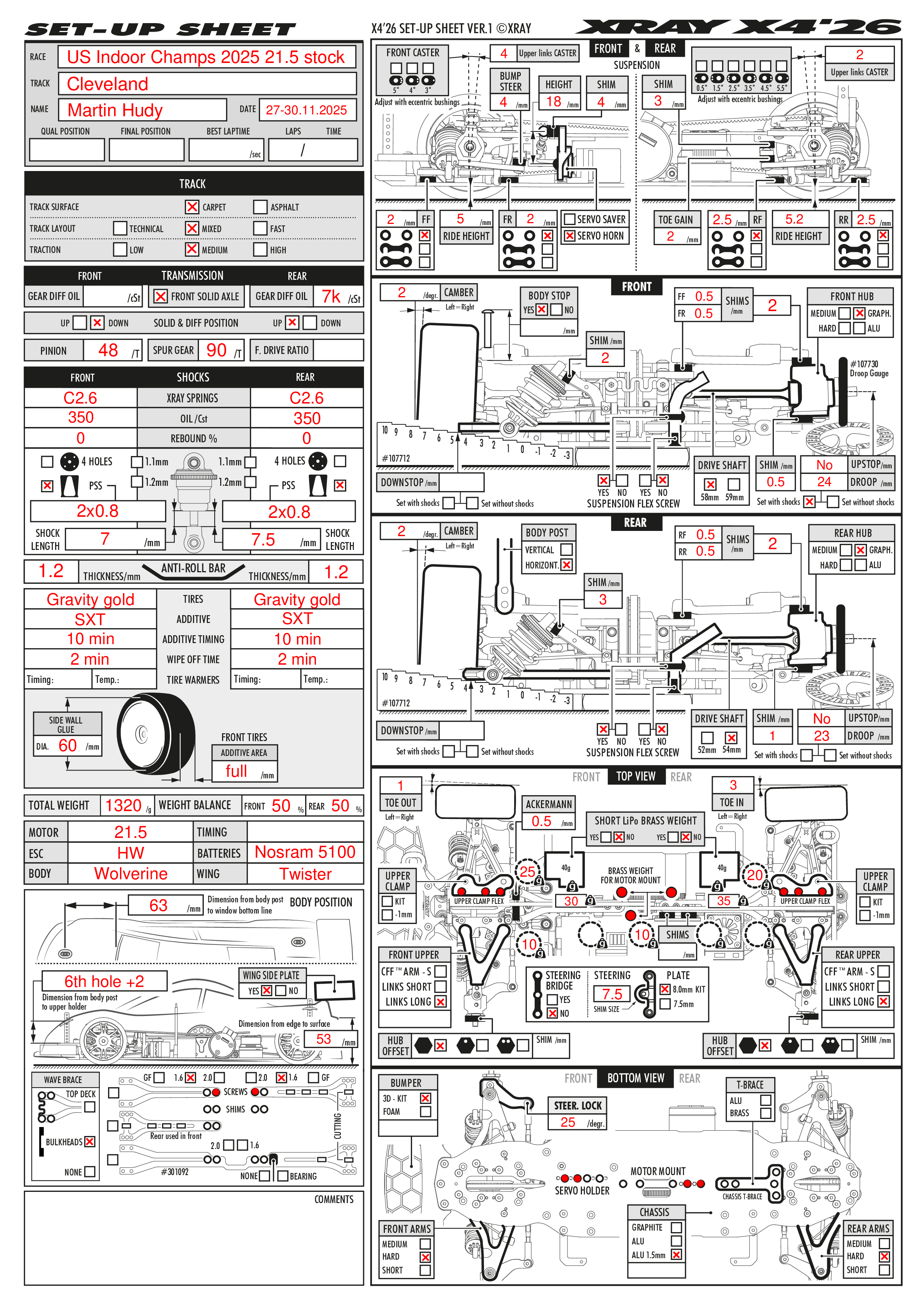
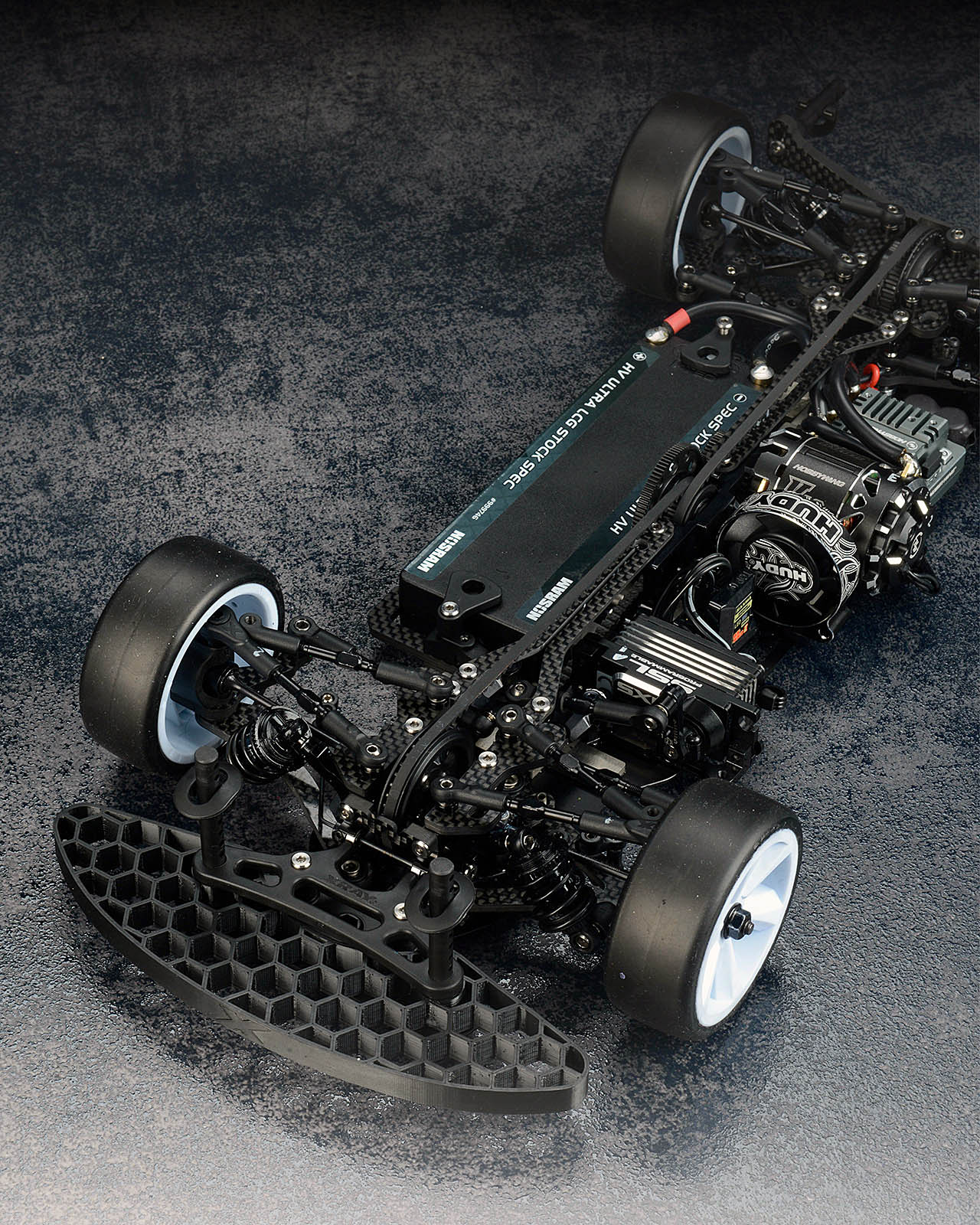
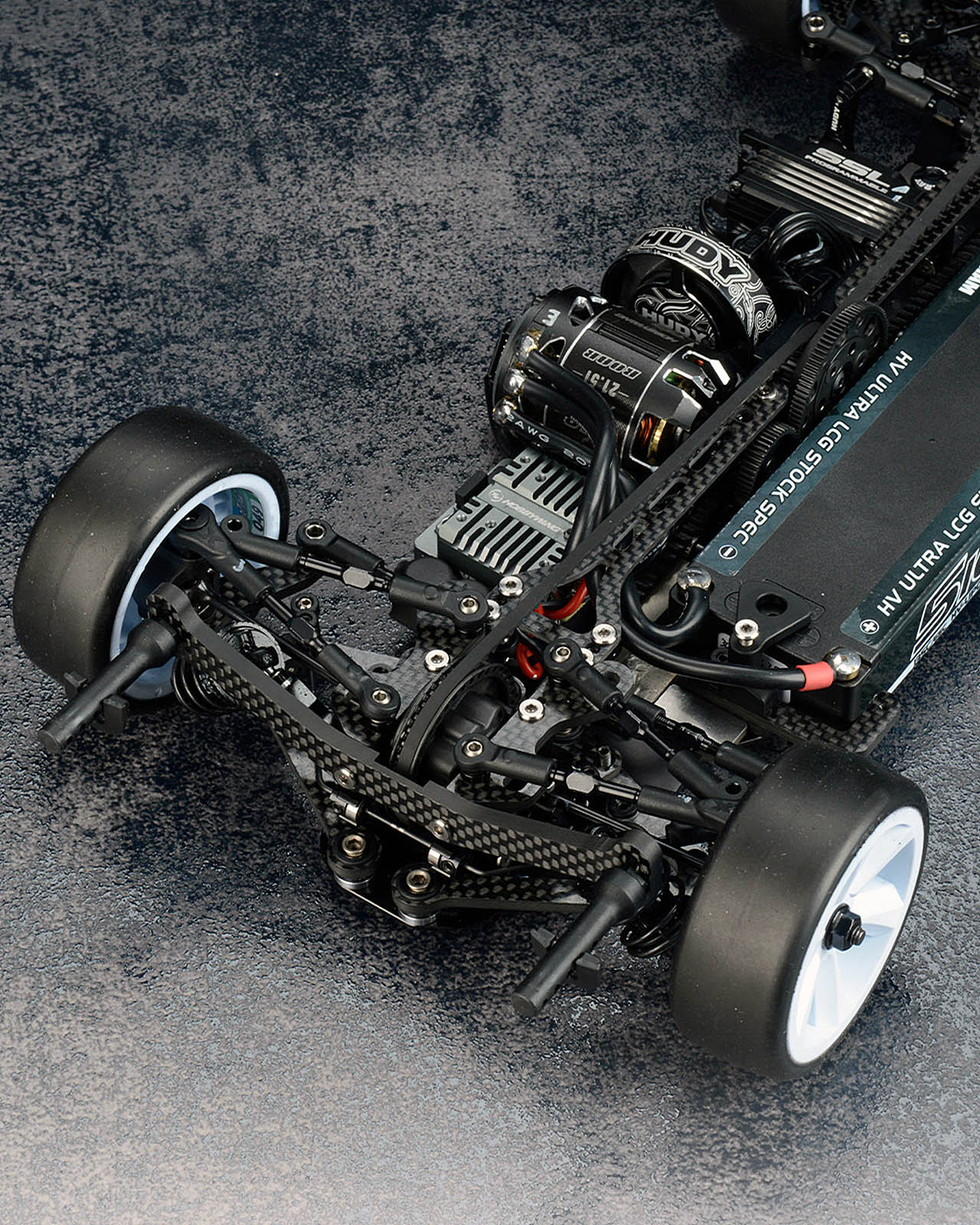
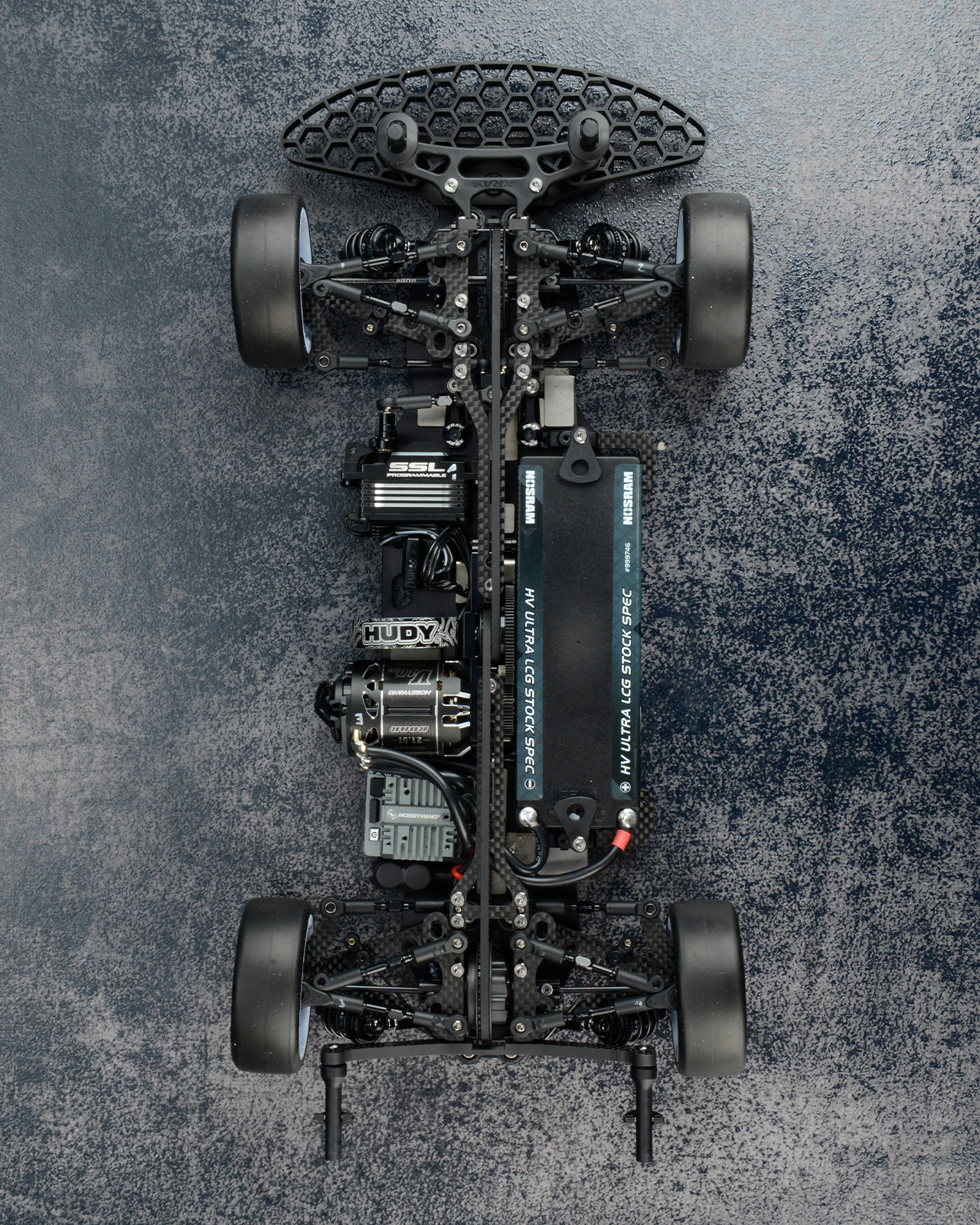
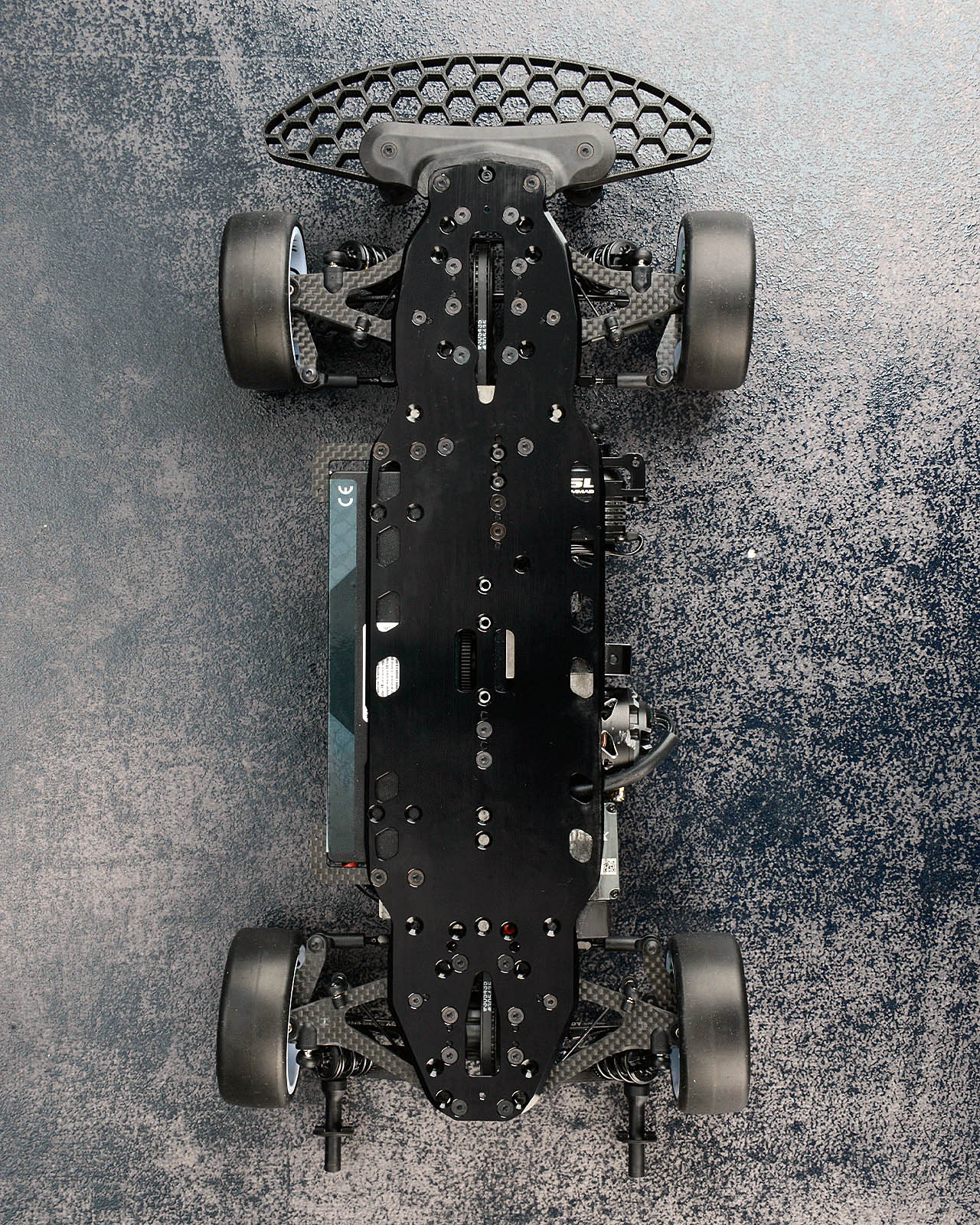
The LMH class is becoming increasingly popular in the US, so I decided to race it as well to better understand how the car handles with the high-downforce bodies—and to be able to help customers competing in this category. I started with the same setup I normally use for my touring car:
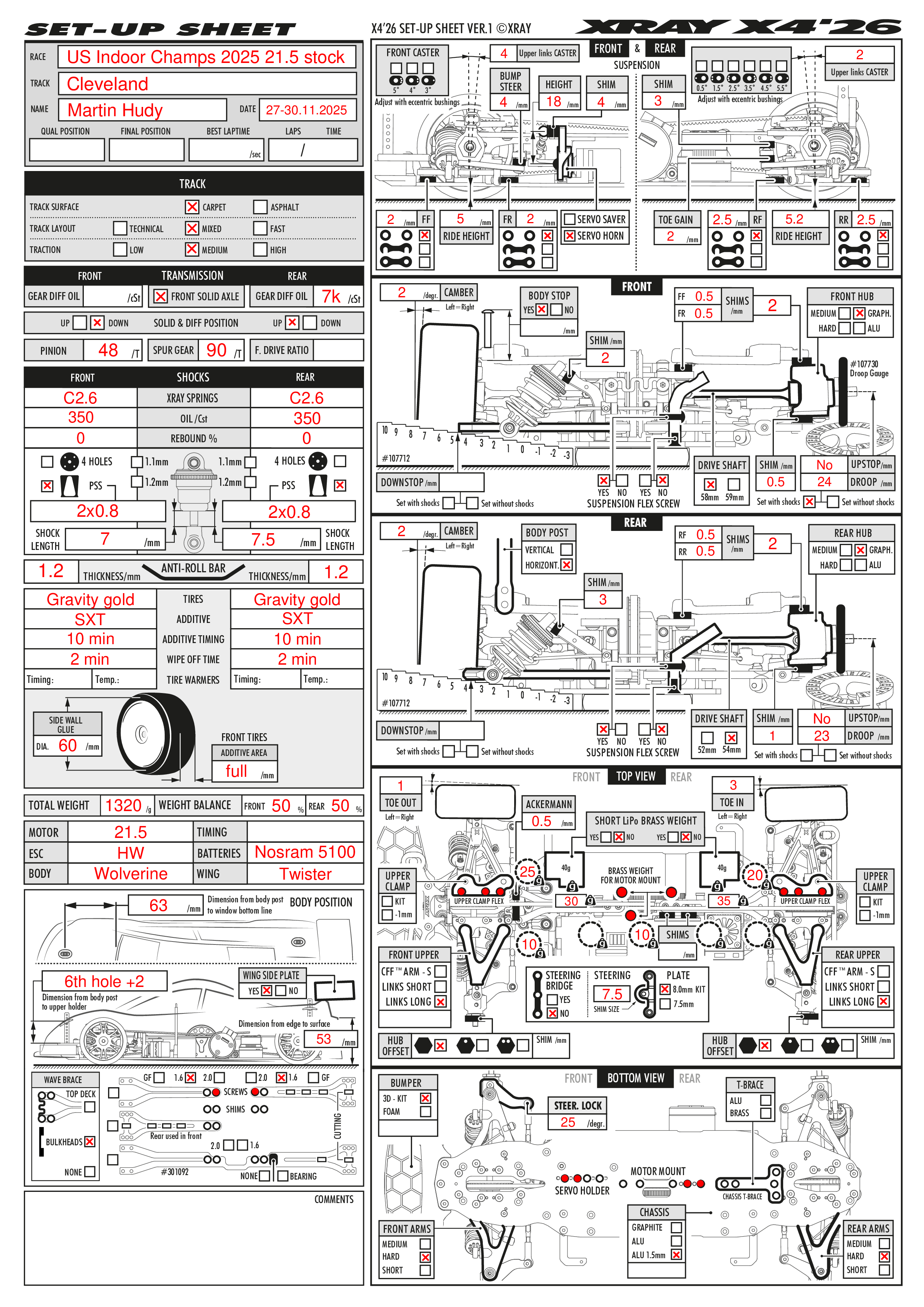
I must say, the car with the LMH body in typical US indoor conditions is much easier to drive and very forgiving. This class is perfect for less-experienced drivers or anyone who wants to come to the track, enjoy racing, and not worry too much about setup complexity.
Because LMH bodies generate significantly more traction and stability, I needed to make some adjustments to improve rotation and off-power steering.
Here are the changes I made:
• Standard upper arms instead of long links – made the car more reactive in tight sections.
• Increased front droop – improved mid-corner steering (changed from 24 to 23.6).
• Increased rear droop – improved off-power steering and rotation (changed from 23 to 22.2).
• Raised rear hub – going from a 1 mm shim under the hub to 1.5 mm further improved off-power steering.
• Reduced rear toe-in – increased cornering speed. I went from 3° to 2.5°. On high-traction permanent tracks, you can go even lower—down to 1°.
• Less toe-gain – reducing the shim from 2 mm to 1 mm helped with on-power steering.
• Softer diff – improved steering in tight sections; I ended up using 6k.
• Raised the solid axle – moving it from the low to the high position also improved steering in tight sections.
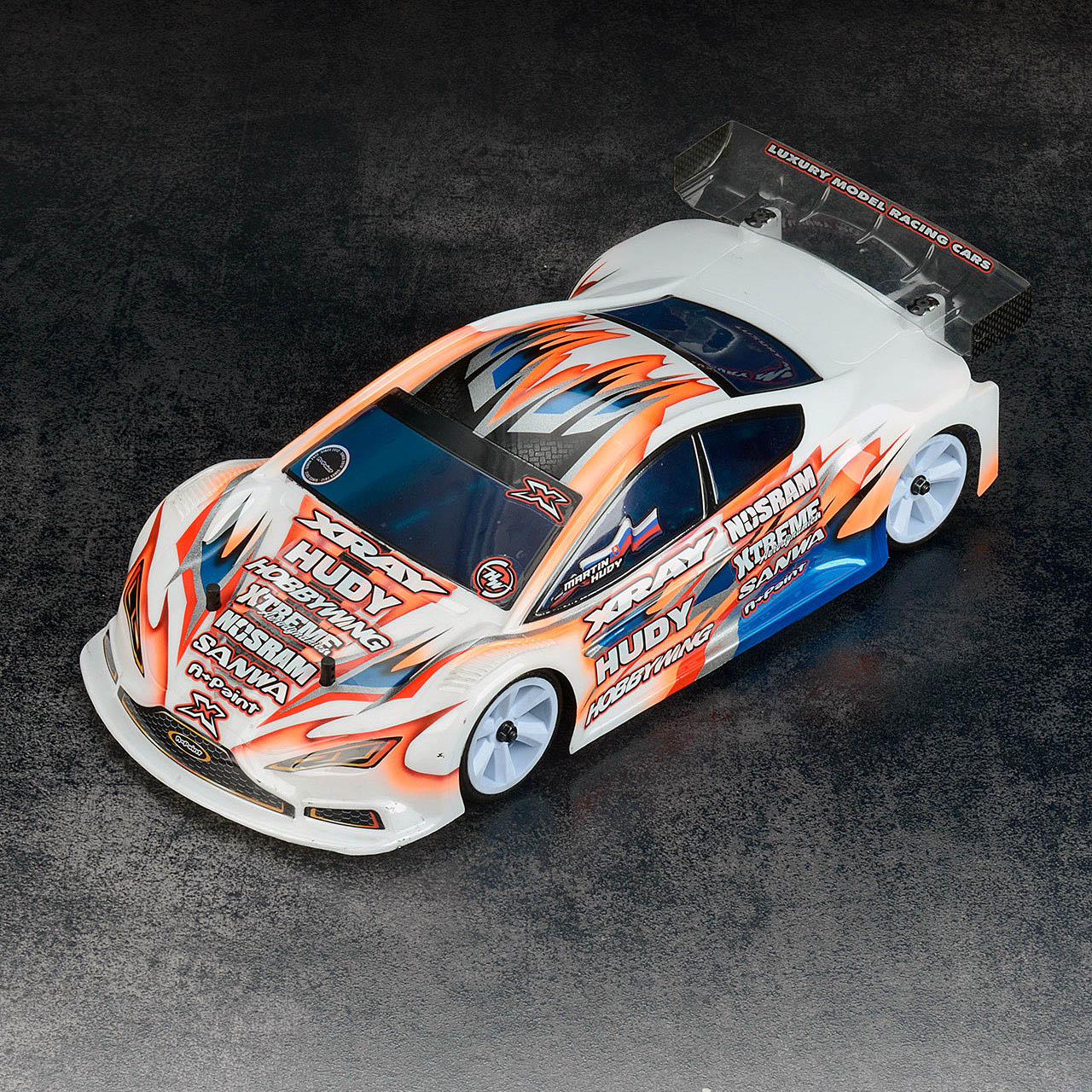
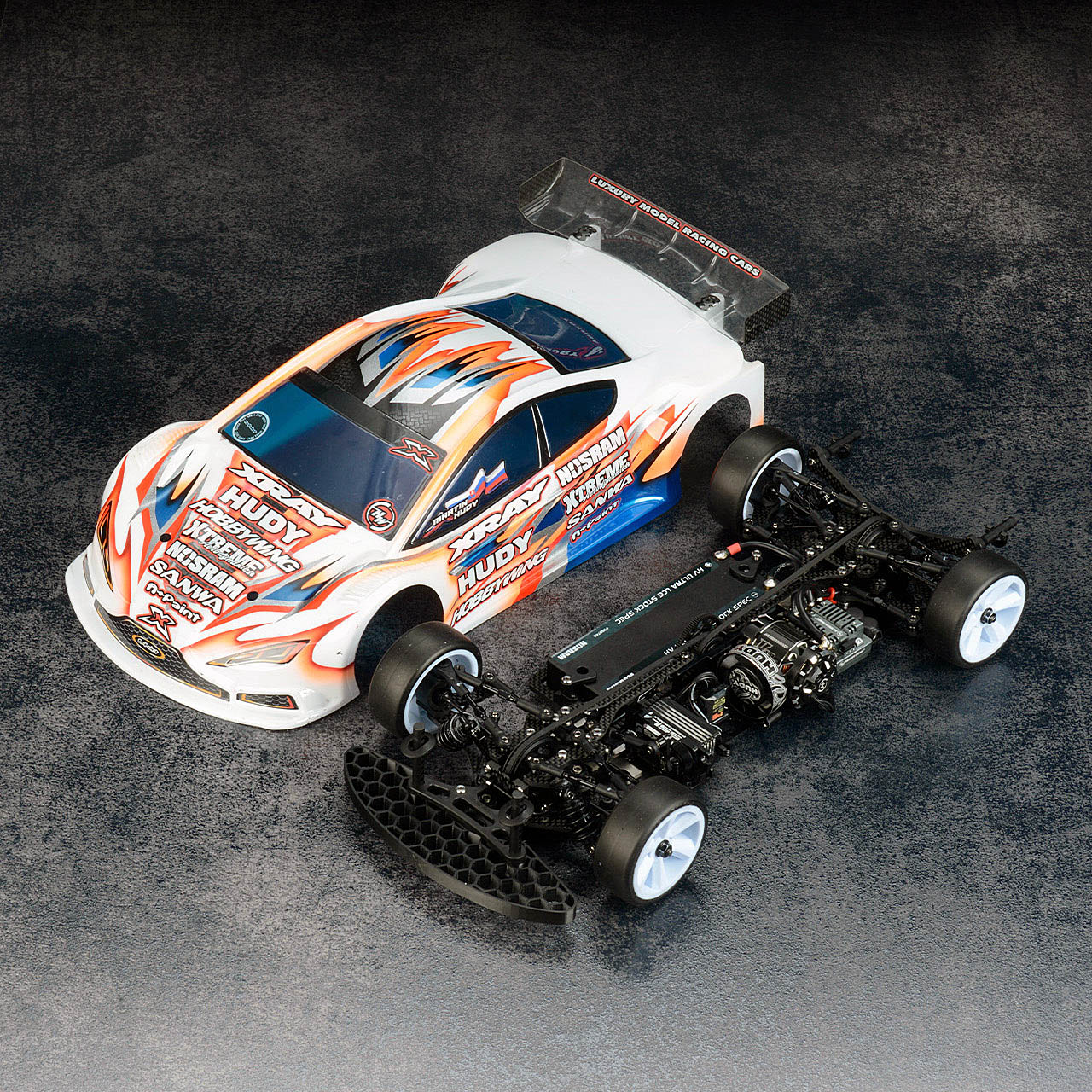
The car worked flawlessly, and I highly recommend trying this setup if you are running LMH or GT Stock with touring tires.
|

