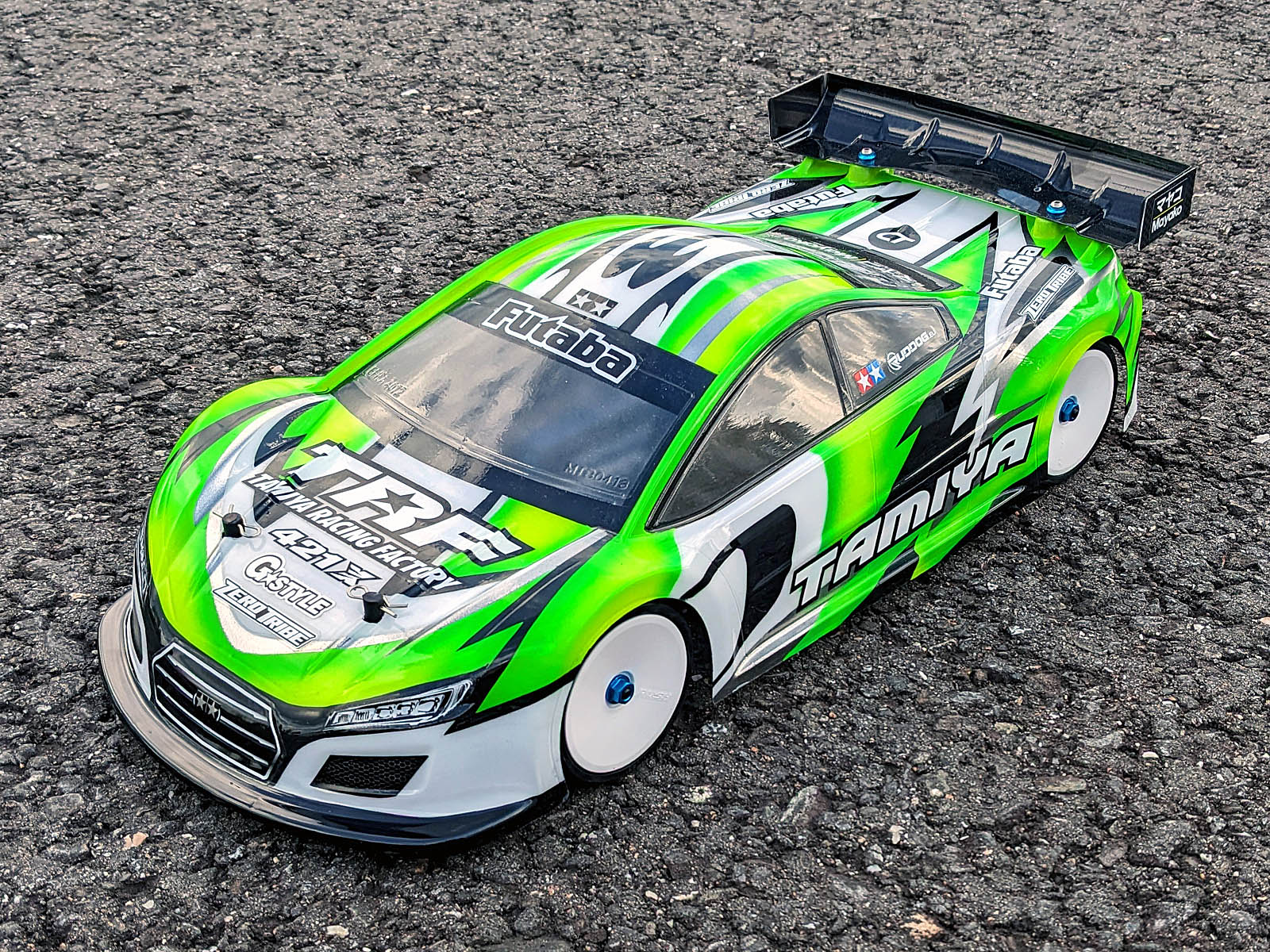
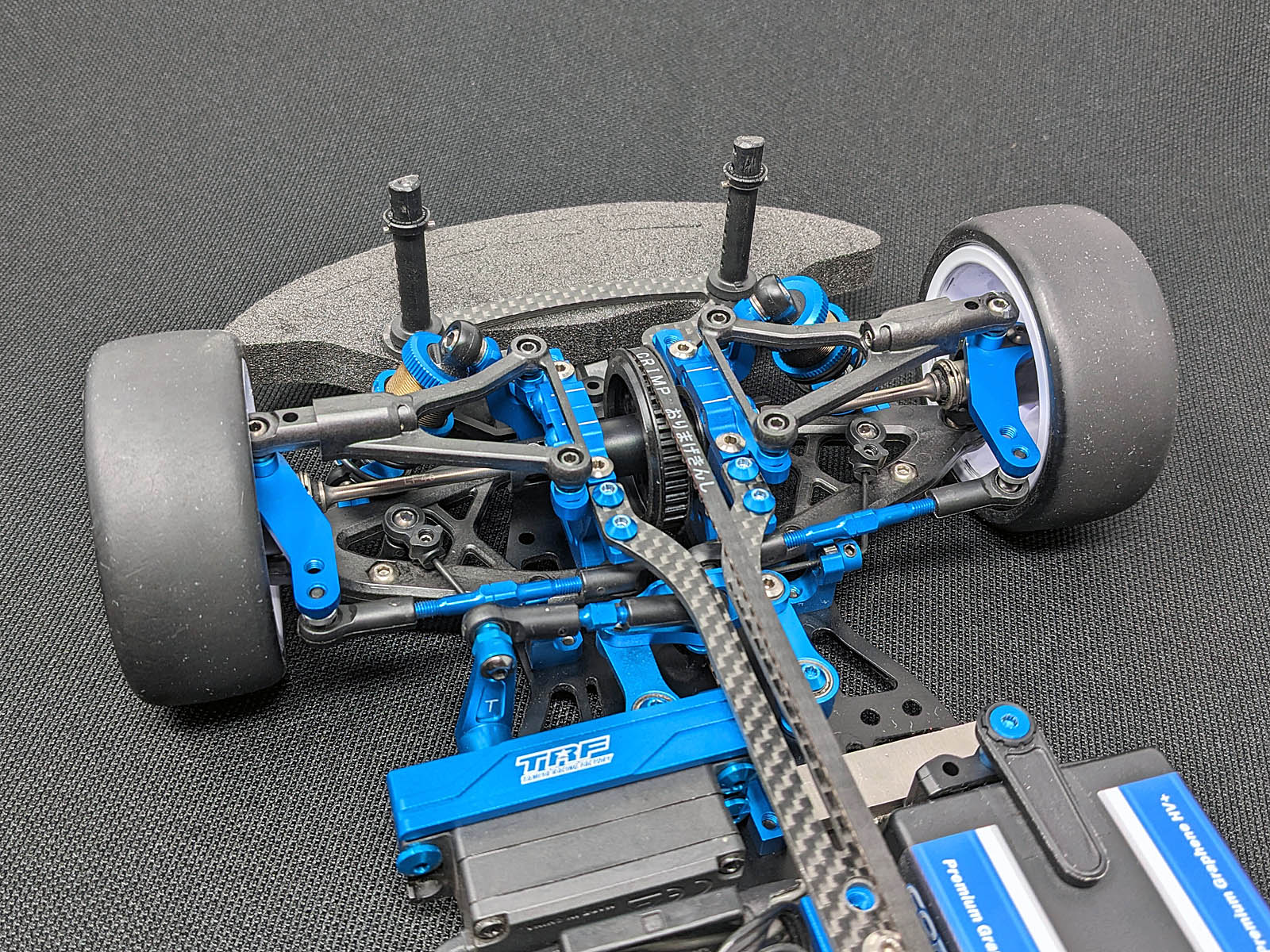
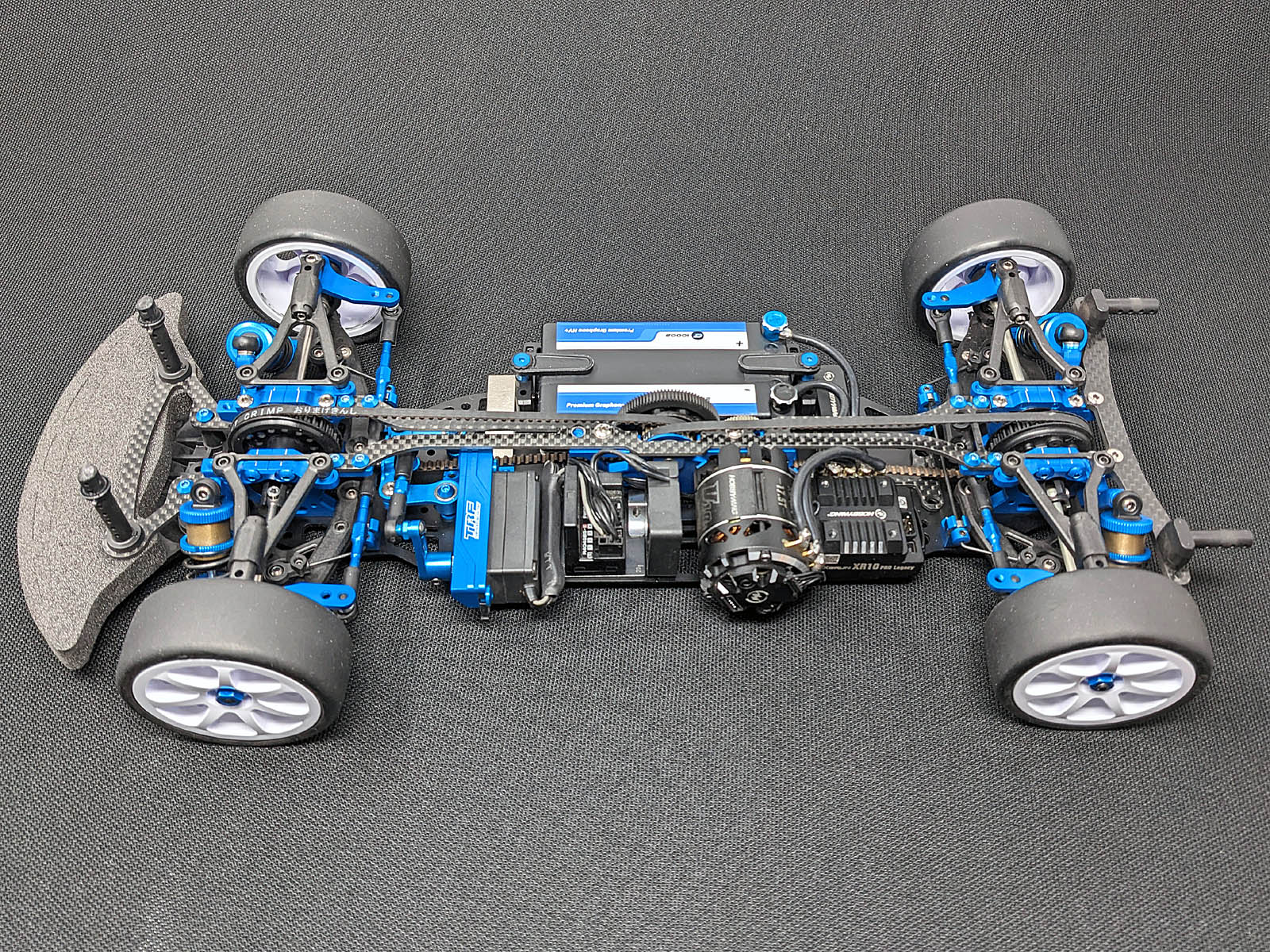
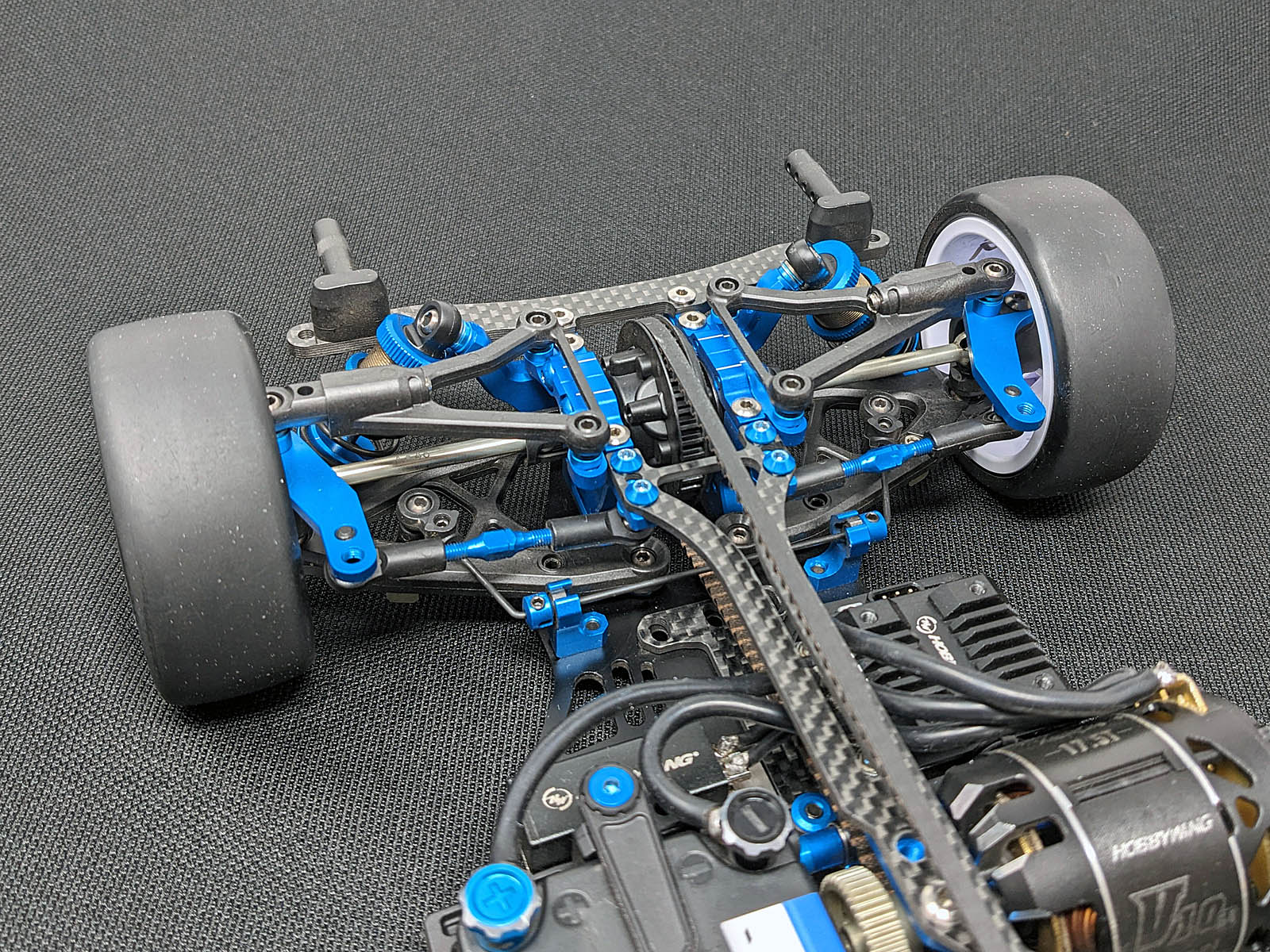
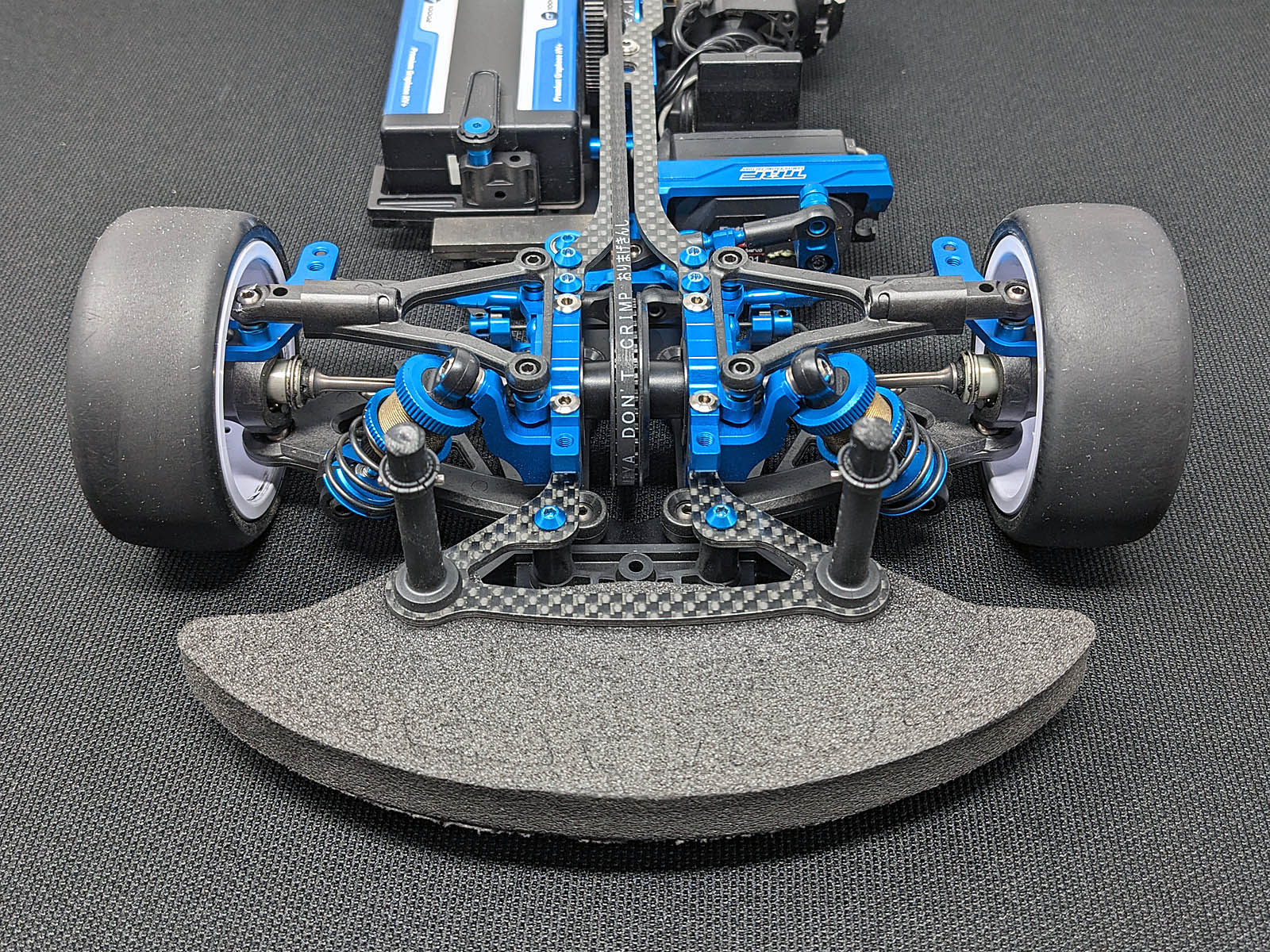
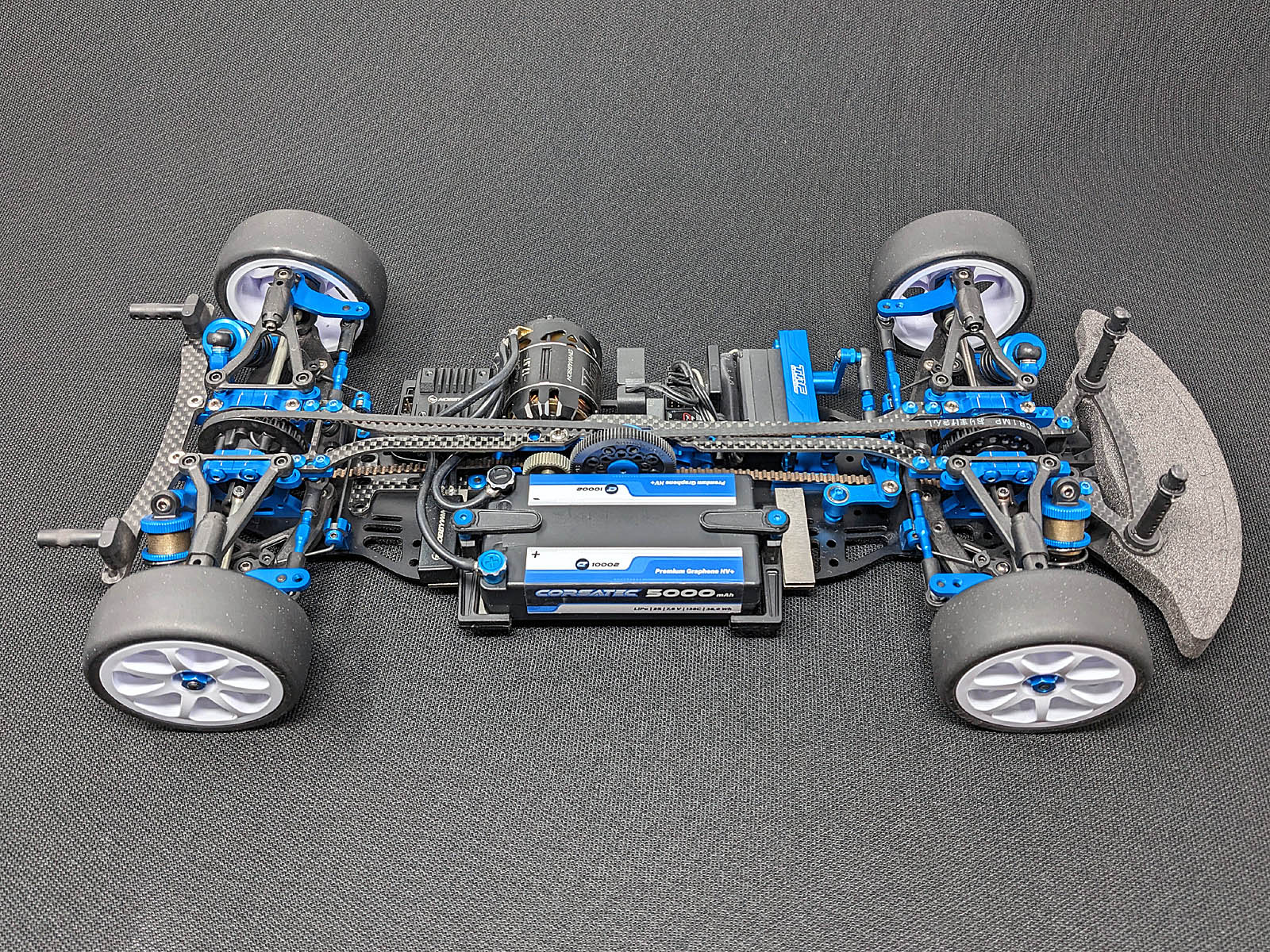
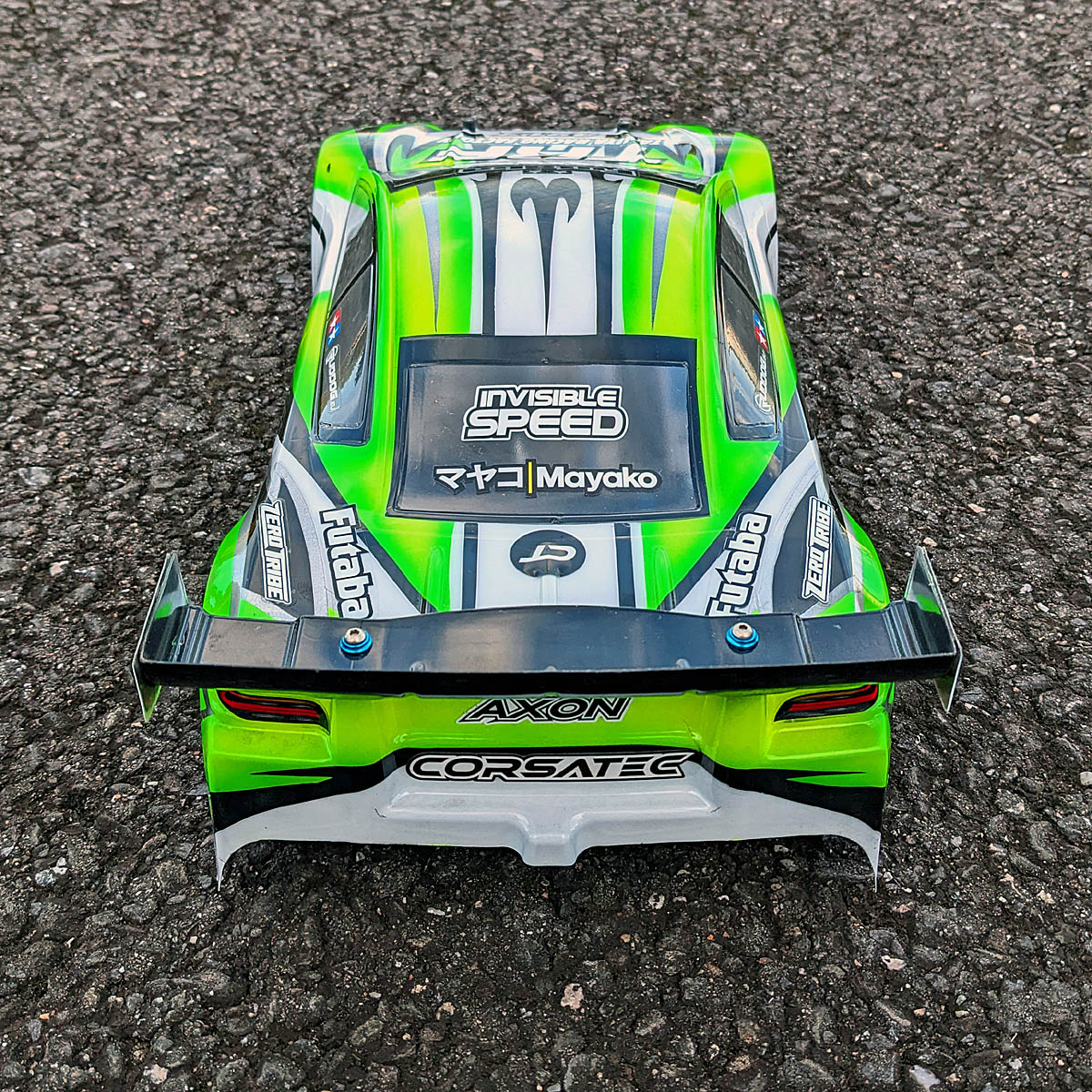
>We’re soon in the middle of September, and therefore it’s time to sum up the 2026 summer season – the first with the new for 2026 Tamiya TRF421X.
Like every year, the hope still lives on that there will be a couple of beautiful September days that allow for a bit more testing, but for now it’s looking not-so-likely. Still, despite some late season unwelcome challenges, I feel I am now content with what I could learn about the TRF421X in one summer. Of course, there are many things still on the list of ideas to test, but it’s OK if that’s for next summer – whether that’s still with the TRF421X in this specification, or if it has some updates.
The TRF421X Chassis Kit arrived back in April, which was very welcome as it meant it was possible to be prepared before the weather would allow testing to begin. Early summer was somehow quite good, which meant I started testing in the second half of May. From then I could test almost every week until the beginning of August, when bad weather and health issues forced a break until the last week of August. Luckily I could squeeze in quite a lot of laps since then.
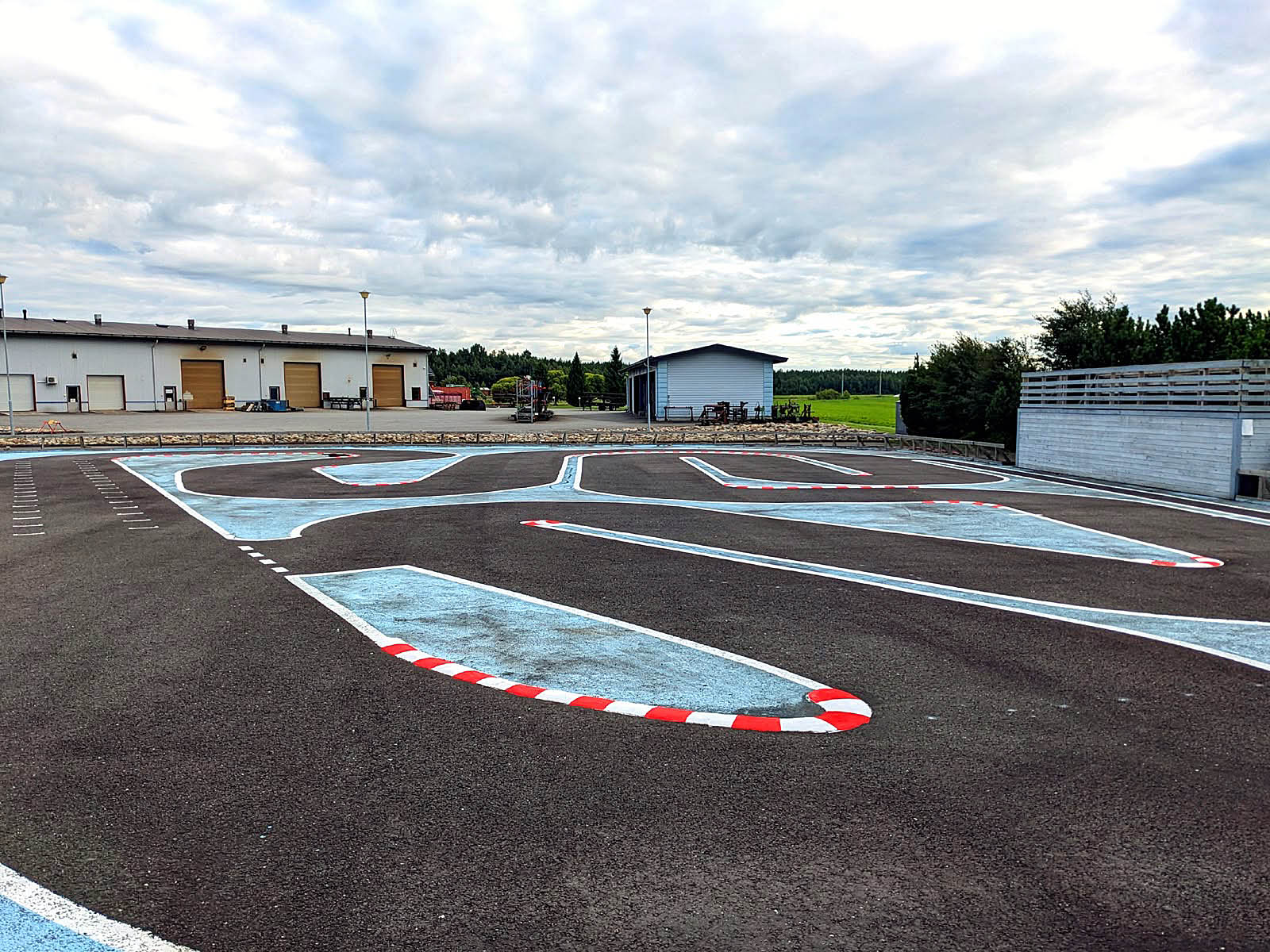
All testing this year was done on this local track – see a video of some laps below.
I have described the track many times before, but it’s built on an area of approx. 40 x 25 meters (quite small/technical/narrow for a Europe track), and the asphalt is not as fine-grit as you would find on typical purpose built RC tracks. This means it’s quite aggressive as it uses larger stones, but this is also good in a way because it means it provides some grip even if there are not many drivers using the track.
Overall it has a bit of a different grip compared to your usual track, but still it’s usually low-grip in early/mid summer and then more medium grip in August. The surface is not prepped in any way, other than blowing it off before the start of each test session.
The layout combined with the surface roughness of course also impacts the setup you run. Since there is not that much grip overall but it’s quite aggressive, you can’t run a car that has too much steering or is too responsive, as you will never get the consistency over 5 minutes like this. The key is to get a car with enough steering without making it difficult.
In total I did around 3200 laps or 180 runs over the summer, mostly with the TRF421X, but some of it comparison runs with the TRF421 early in the summer.
This summer I prioritised TC testing 100% and did not do any FWD testing as I did not have anything new to test there. Still, I had planned to do some, but with the enforced break in August I made the decision to focus fully on the TRF421X from then on.
Before the season I really looked forward to trying the TRF421X, and still now I would just want to continue testing, as it has been a lot of fun again.
If we look back to what Tamiya stated about the development direction or focus for the 421X project, it was to improve the potential of the car for high grip and high temperature conditions.
You can never call the conditions I test in high grip or high temperature, as typically the ambient temperature will be around 18-22 deg C, track temperature 25-35 deg C, and grip is medium at best. Therefore it was important to dedicate some time early on to run the car back-to-back with the 421 in the same conditions, and also try some 421 parts on the 421X.
Right from the start, 421X laptimes were just a bit quicker, and soon I would also be about 1-2 seconds faster over 5 minutes with X, even in the low grip conditions.
The X was never quite as comfortable as the 421 though, and even now after this first summer I would still say this is the case. Don’t get me wrong, the 421X is still the second easiest car I have ever driven on this track, but it’s a bit more on the edge, free, and reactive compared to the 421 – which is probably why it’s also faster. Of course, the 421X also has a lower CoG, and one stand-out thing during testing was how easy it is to catch the car or recover from small mistakes.
In these particular conditions I don’t think there is a huge pace difference between a fresh 421 and a fresh 421X though, but even here you can feel that the higher the grip and temperature, the bigger the 421X advantage will be. And the 421X added many fine-tuning options to the 421 platform, making it a car with a broader window.
One thing I learned quickly was how big an effect the new knuckle arms could have, and in early season low grip conditions the 421 ones made the car so much more comfortable to drive. I redid the comparison late in the season, and now the 421X ones made much more sense. I feel that in the right conditions they can help to gain a bit more corner speed, but in the end I still prefer the 421 ones – both front and rear actually. But it’s well worth having both options.
One late season change I made, and one I felt stupid I had not tried earlier as I found this already on the 421, was to run more spacers under the steering link ball stud (outside – where it connects to the knuckle arm). This instantly gives you free laptime around the tight 180 deg corners on the track I test at.
After establishing some kind of baseline, I tested first the WeiRC steel chassis, and then later the H2RD carbon chassis.
Of these, I did not really get along that well with this particular steel chassis, which was a bit unexpected as the WeiRC TRF421 one had worked really well in the same conditions.
The H2RD carbon chassis was on the other hand a positive surprise, and it actually stayed on my car for a long time. There is something about how a carbon chassis feels that I really like, and in low grip it was actually the fastest.
Towards the end of the season when grip was more medium, I went back to the standard 2.0mm alu chassis to get another back-to-back comparison, and I would say Tamiya definitely made the right choice if they had to pick one for the kit.
In these late-season conditions the standard chassis was just as fast but easier to drive compared to the carbon one.
Another test I did was to use the TRF421 upper arms, which are glass-reinforced and significantly softer than the carbon-reinforced ones on the TRF421X.
Again, in low grip this was an improvement, as they made the car a bit easier and more forgiving. However, when switching back in higher grip conditions the 421X upper arms were better.
Despite the upper arm mount changes to the 421X, I also feel that with the carbon-reinforced parts the upper arms are even more free – maybe due to the harder material.
One thing to note is that although the sliding nut upper arm mount design work really well and make binding upper arms a thing of the past, I quickly realised that they can be a bit of a pain when removing the upper arm or changing spacers under the ball stud. One solution is to use some heavy grease like Tamiya AW grease on the alu sliding nut to prevent it from dropping out, but in the end my preferred way was to always hold it in place from the underside with a bit of blu-tack or cleaning gum while working on it, just until you thread the ball stud again, and then just remove the gum before tightening everything up.
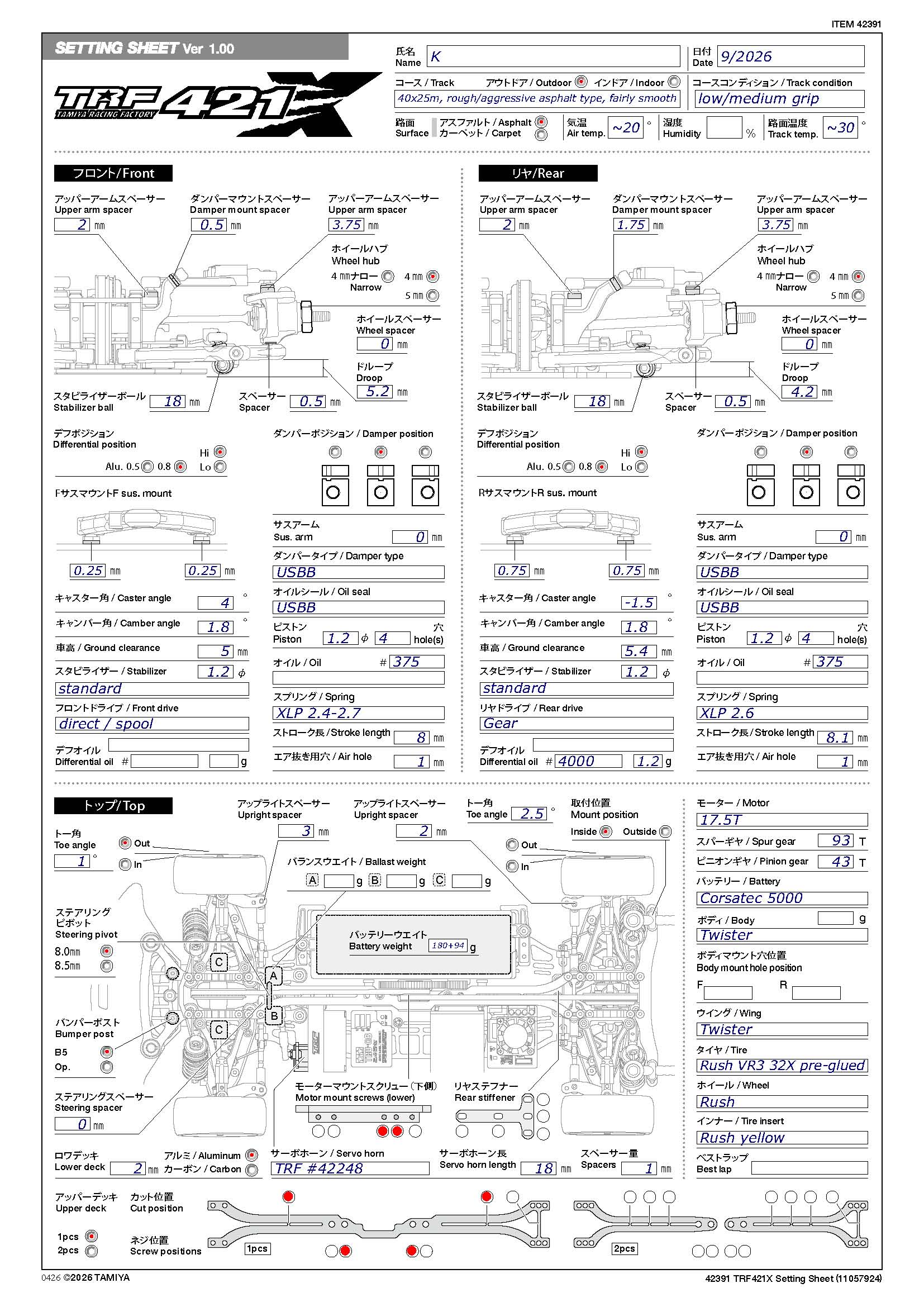
I tested many different springs and combinations early on, but quite quickly settled on Xray XLP 2.4-2.7 progressive springs on the front.
The rear springs I would change between XLP 2.6 and 2.7 depending on the conditions, but mostly I run the 2.6 variant. The harder 2.7 spring on the rear is a bit safer, but on the track Irun I usually like the extra totation the 2.6 rear spring gives.
The 421X came with new 4 x 1.2mm pistons, and after testing various oils, I ended up quite soft, finding #375 to #400 to be the optimum.
Likewise I tried quite a few roll centre options, but this was done more towards the end of the season when conditions were both better and more consistent.
You can check the exact settings on the setup sheet at the bottom of this post, but the basics I settled on were 0.75mm under the rear lower arms and 0.25mm under the front arms.
For the upper arms I run 2mm inside and 3.75mm outside.
Overall I felt I had to setup these things a bit more conservatively or safe on the 421X compared to the 421, and the X in itself is a bit more lively.
For example, on the 421 I usually set the front upper arm with 0.5mm or 0.25mm higher under the rearward upper arm ball as it made the car always faster, but on the 421X I found I could not use this setting. After trying it many times I always felt it made the car a bit difficult and less consistent.
Lately I find myself making smaller changes, partly as it is something I learned over the last couple of years, probably because the cars are so good and precise now, but also influenced by Invisible Speed. This is the reason that you last year and this year find a lot more 0.25mm spacers used on my car instead of always 0.5mm steps.
Top deck options and how they are mounted now really allow a lot of fine-tuning of the car.
Obviously, the 421X again included both one-piece and split top deck options. In addition, you can use those from the 421, as well as cutting various ribs from the 421X ones, and if that’s not enough you can also use different types of screws and/or bushings and shims.
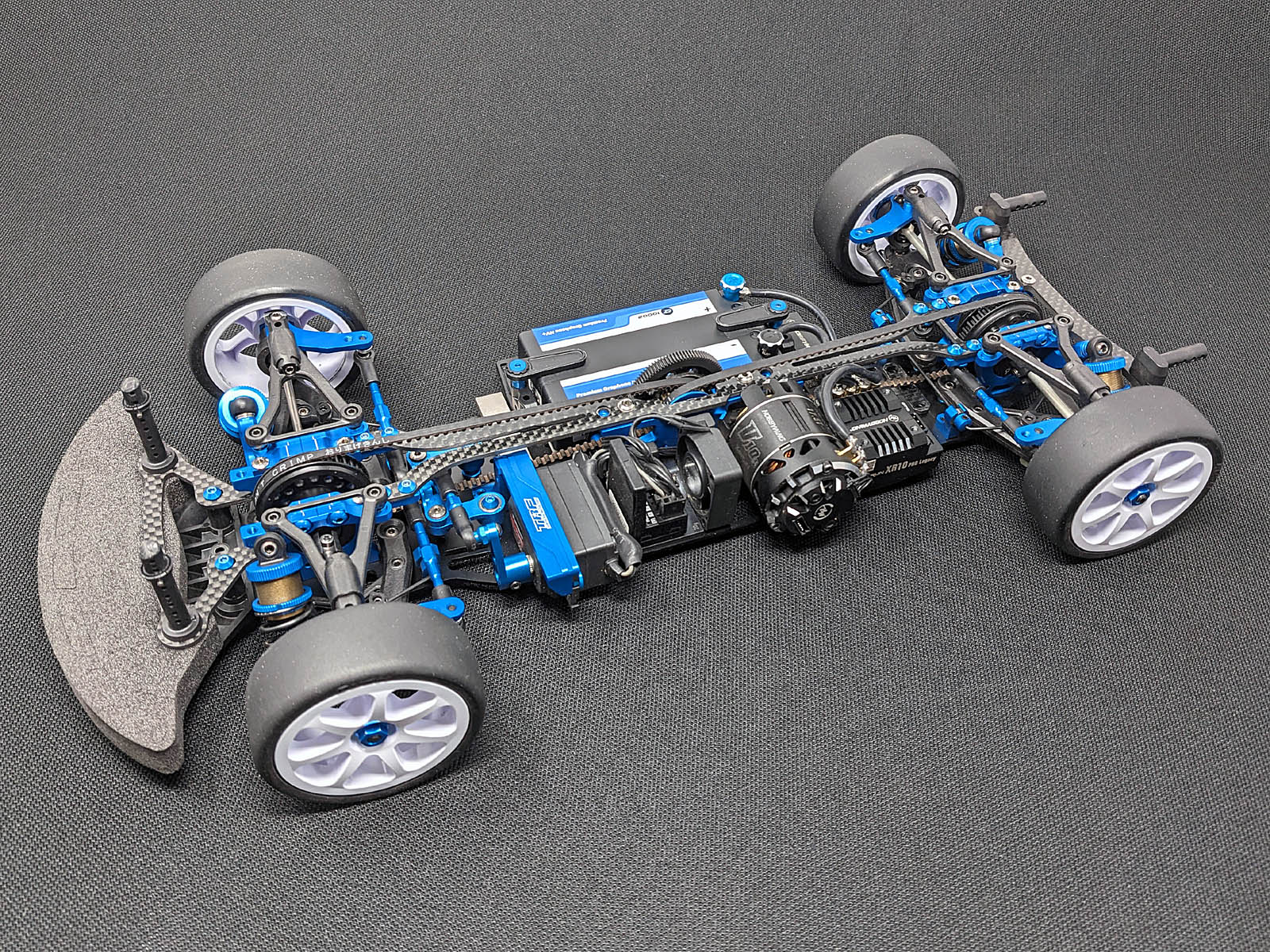
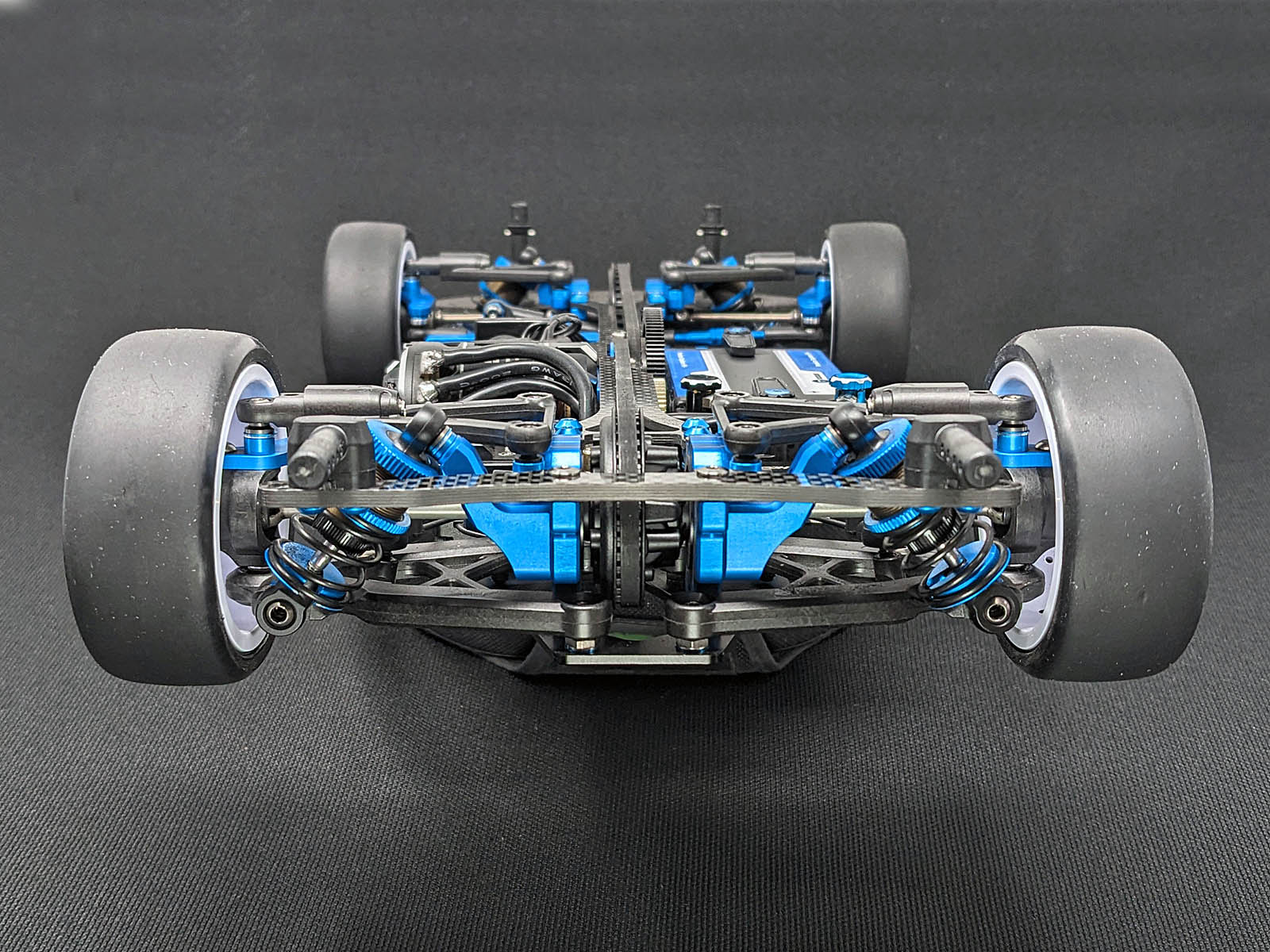
I tested all different variants back and forth, but most often I preferred the 421X one-piece top deck, mounted as seen above.
This is with two screws, using the special titanium screws, bushings and 0.2mm shims. This allows the top deck to move a bit up/down, but is solid enough to make the car consistent and easy.
The top deck also has the ribs cut away. I use alu screws to secure it to the bulkheads. Using different screws here is noticeable, and so far alu screws has been my favourite.
Using all these options available is a great way to fine-tune for any condition.
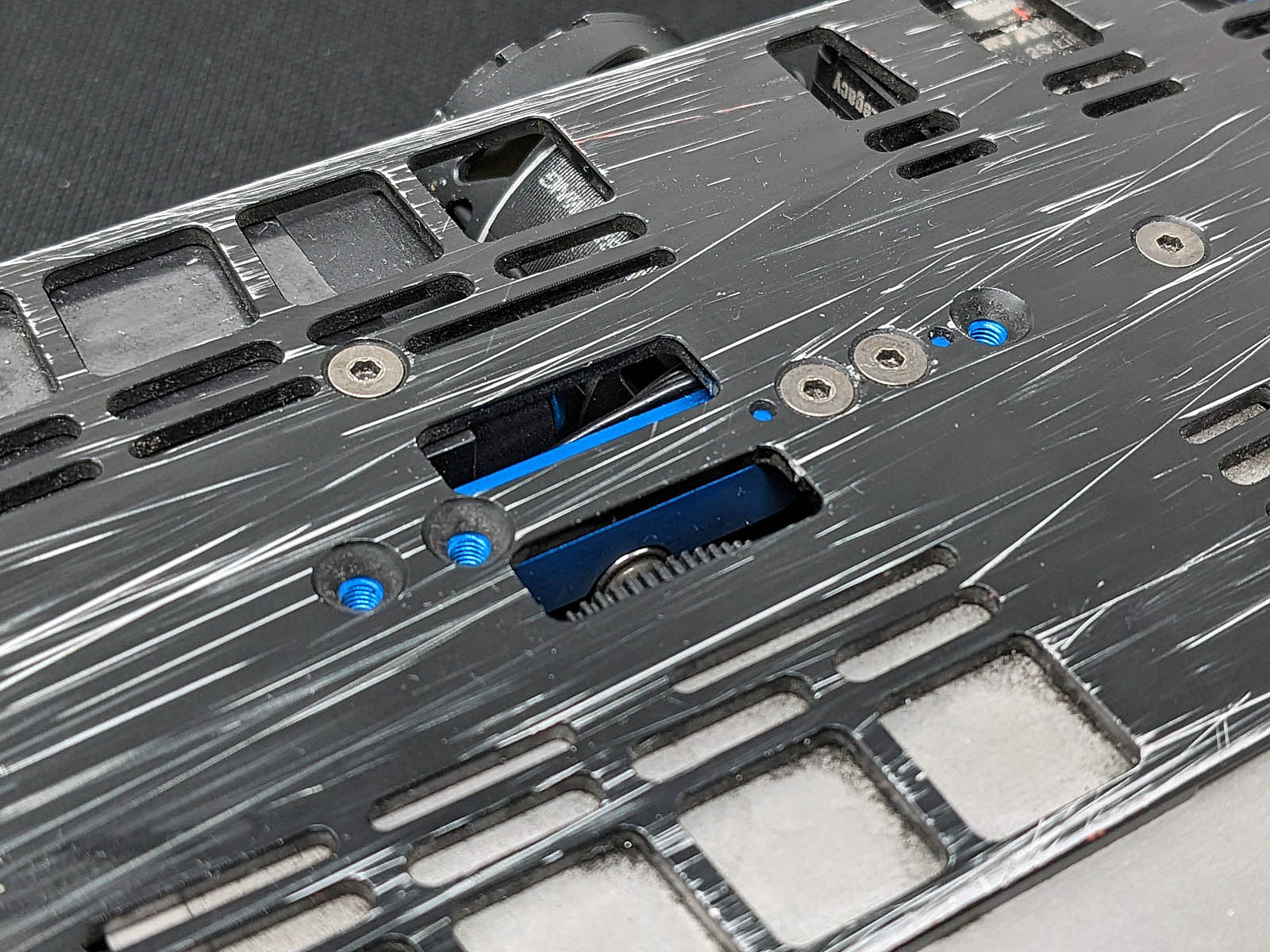
This is what a black anodised chassis looks like when you run a lot and have kerbs on the track you sometimes run over!
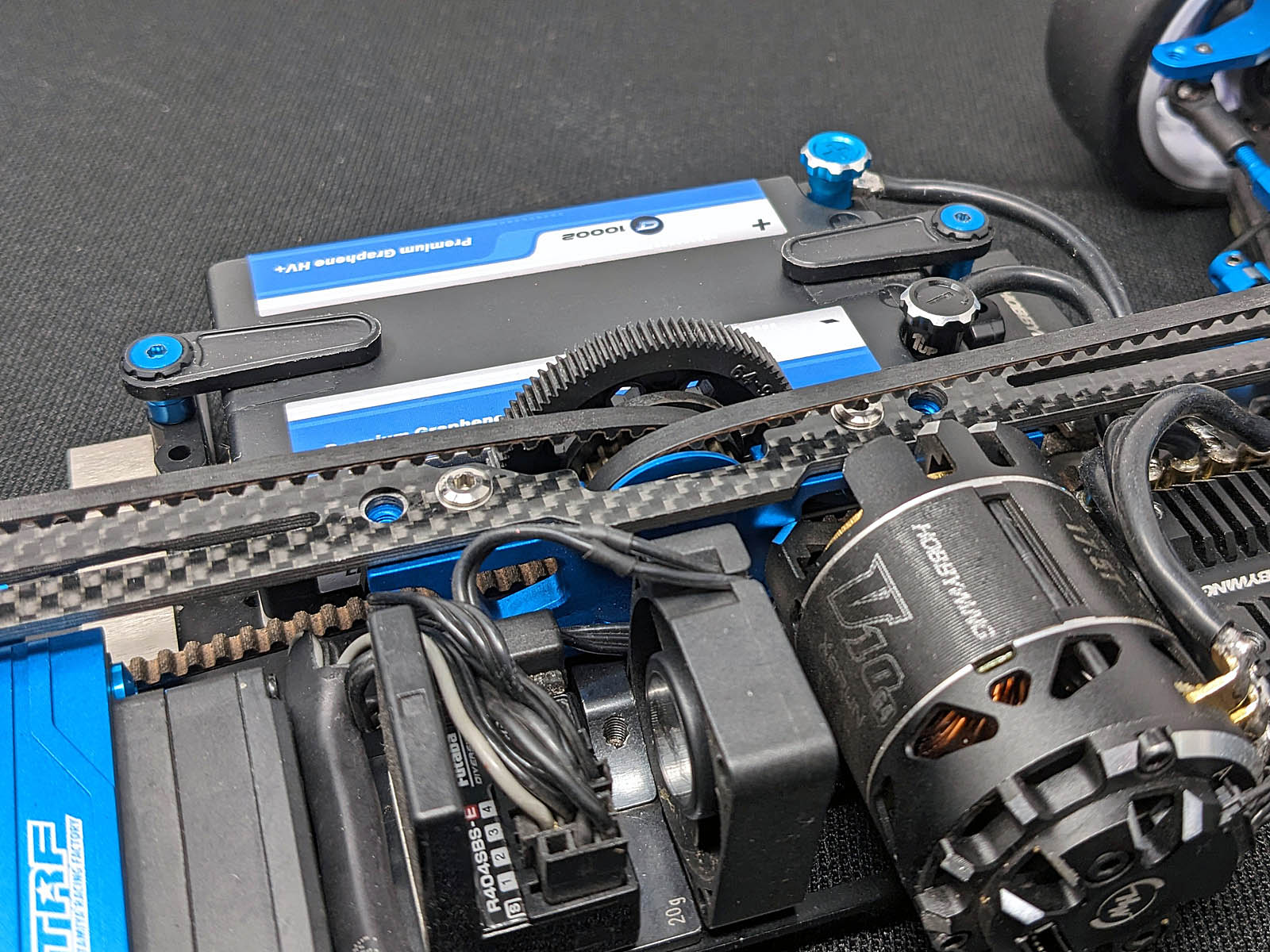
Here you also see how the motor mount is secured to the chassis, with two screws behind the spur gear.
Even though there is a screw used where the flex brace / T-brace goes, this is only to hold it in place for easy changes at the track. In the end, I did not actually use the brace, although with the carbon chassis I did. When using it I only used one screw front and one rear. The brace makes the car a bit more easier to drive with the rear end more settled. It also gets the power to the rear wheels a bit more quickly.
Another setup difference is that I finally settled on running high diffs on the X, while on the 421 I liked low diffs better. Not 100% comparable of course since the chassis is 0.25mm thinner than the standard 421 chassis.
This was with the standard 0.8 diff holders, as I still have not spent the money to get the optional 0.5 holders, anticipating changes here on future updates or cars. Really though, I think 0.5 and high would have been the best choice.
All in all I would say I have found that I have to setup the 421X slightly differently compared to the original 421. This is no surprise given the many changes made both in materials used and geometry.
I did not really have any broken parts or reliability problems throughout testing with the TRF421X. All parts held up well, even the tiny driveshaft bearings. And I did not really find any real issues with the car like binding parts or such.
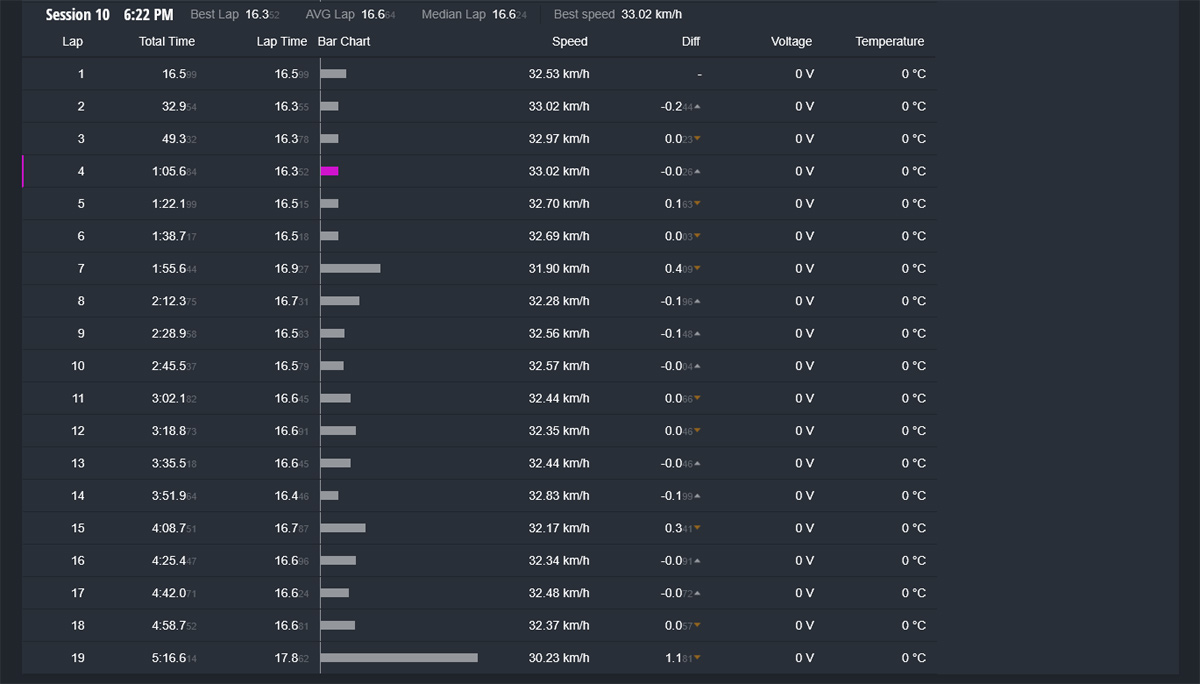
The only reliability issue I remember now is from the run above, which so far also looks like it will be the last run for 2026. I had made a change I wanted to try (weight balance), it was almost starting to rain, and I knew this might be the last run of the summer. So I rushed onto the drivers stand and did the run with just a couple of raindrops, but on the last lap the right front upper arm came loose from the upright, messing up the last (19th) lap. But it rewarded me with the best laptime for the summer, so it was all worth it.
That’s also the explanation for the word upper arm ball joint seen in the photos.
Overall then the TRF421X has treated me well, and the 421 generation or platform is still by far my favourite TRF TC so far.
Like I already mentioned, there is still many things to try learn with the car, and I’m sure if I run it for another summer it will be even better this time next year.
I would not mind an update though. Perhaps, with the some customers now having the TRF421 and some the TRF421X, it would be a good time to revive the old TRF tradition of upgrade kits.
So just like there was a TRF419XR upgrade kit in 2017, perhaps there could be a TRF421XR upgrade kit in 2027. We can always hope!