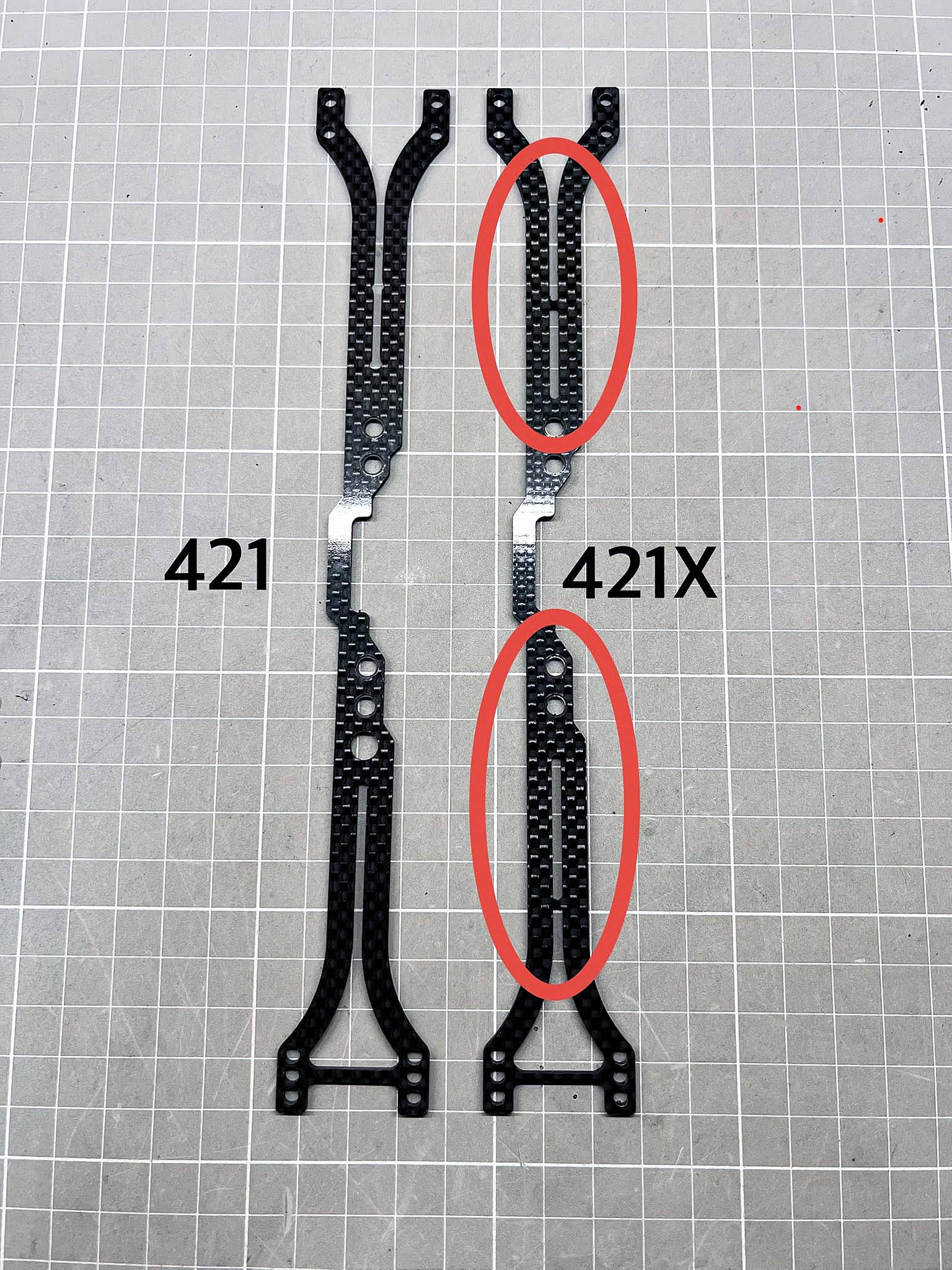
Here are the parts I believe make the biggest difference between the 421 and the 421X.
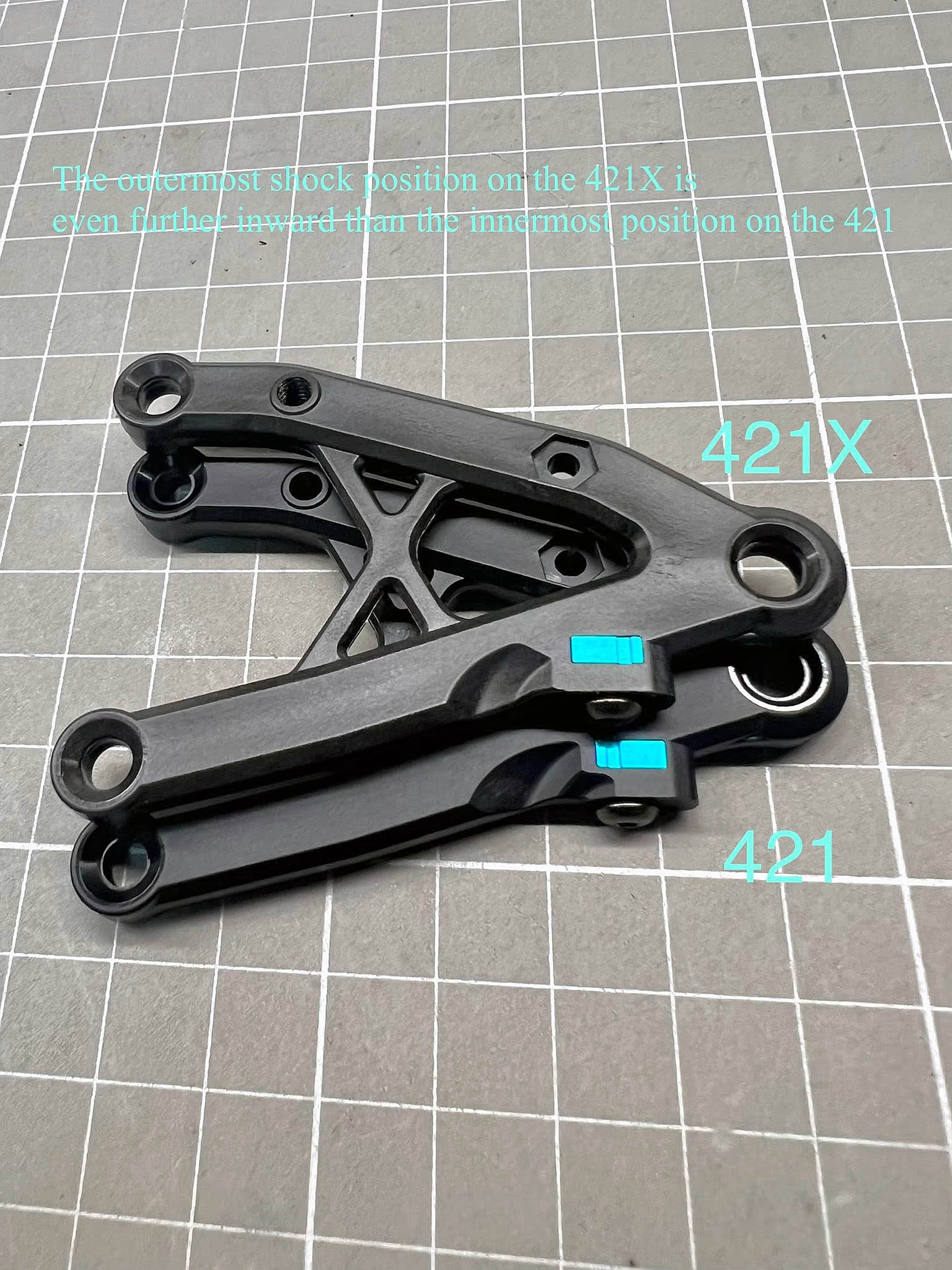
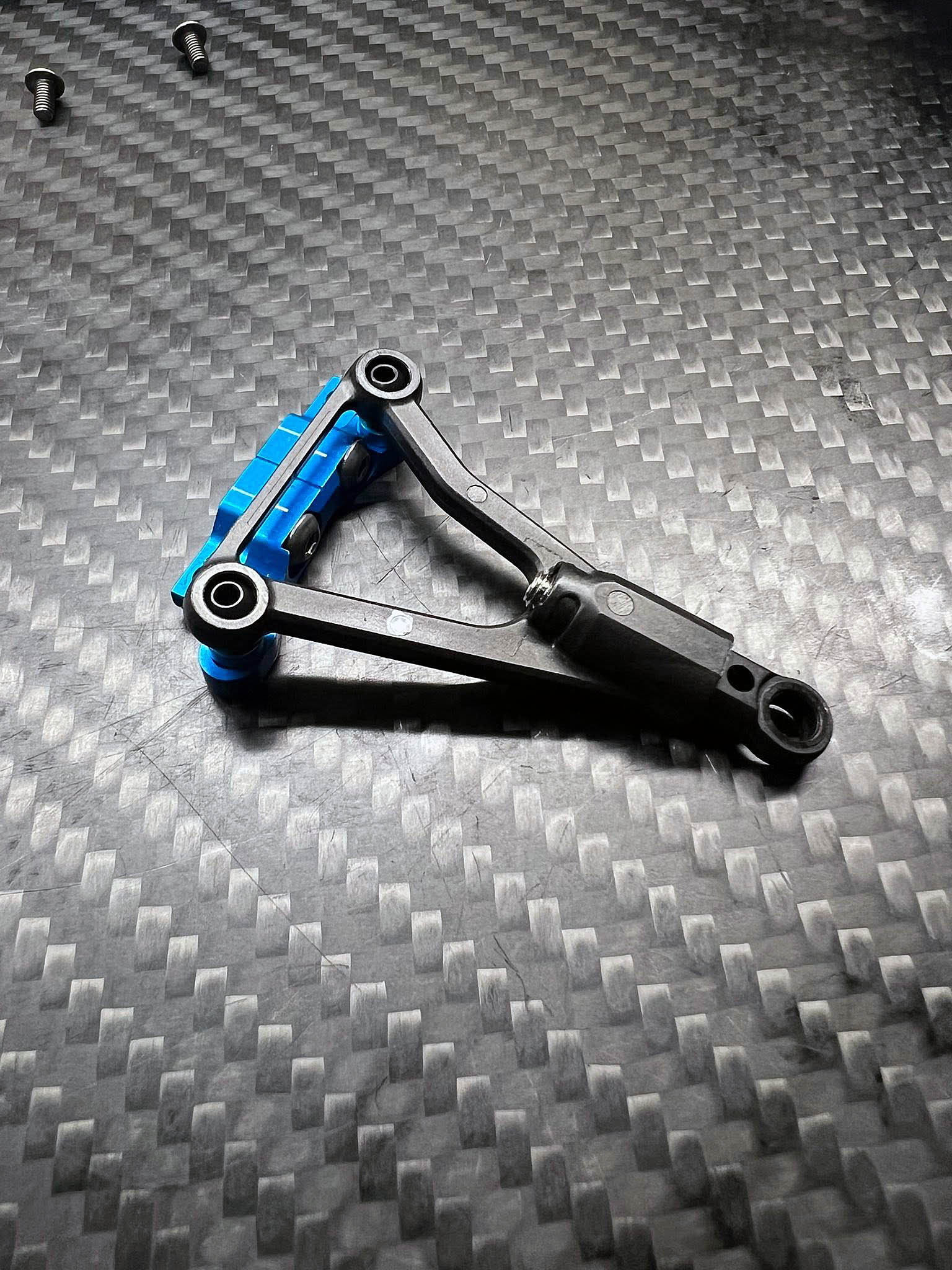
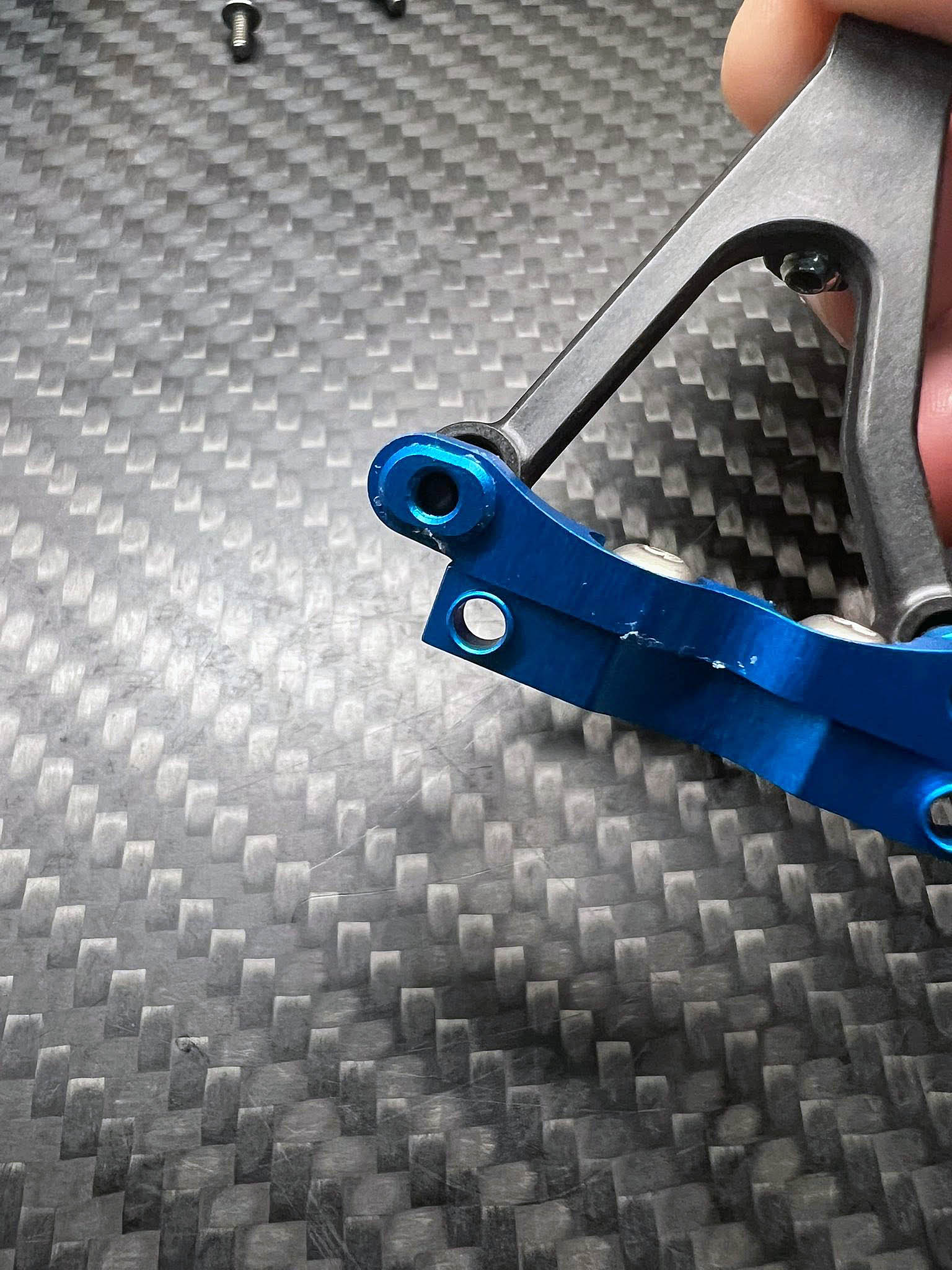
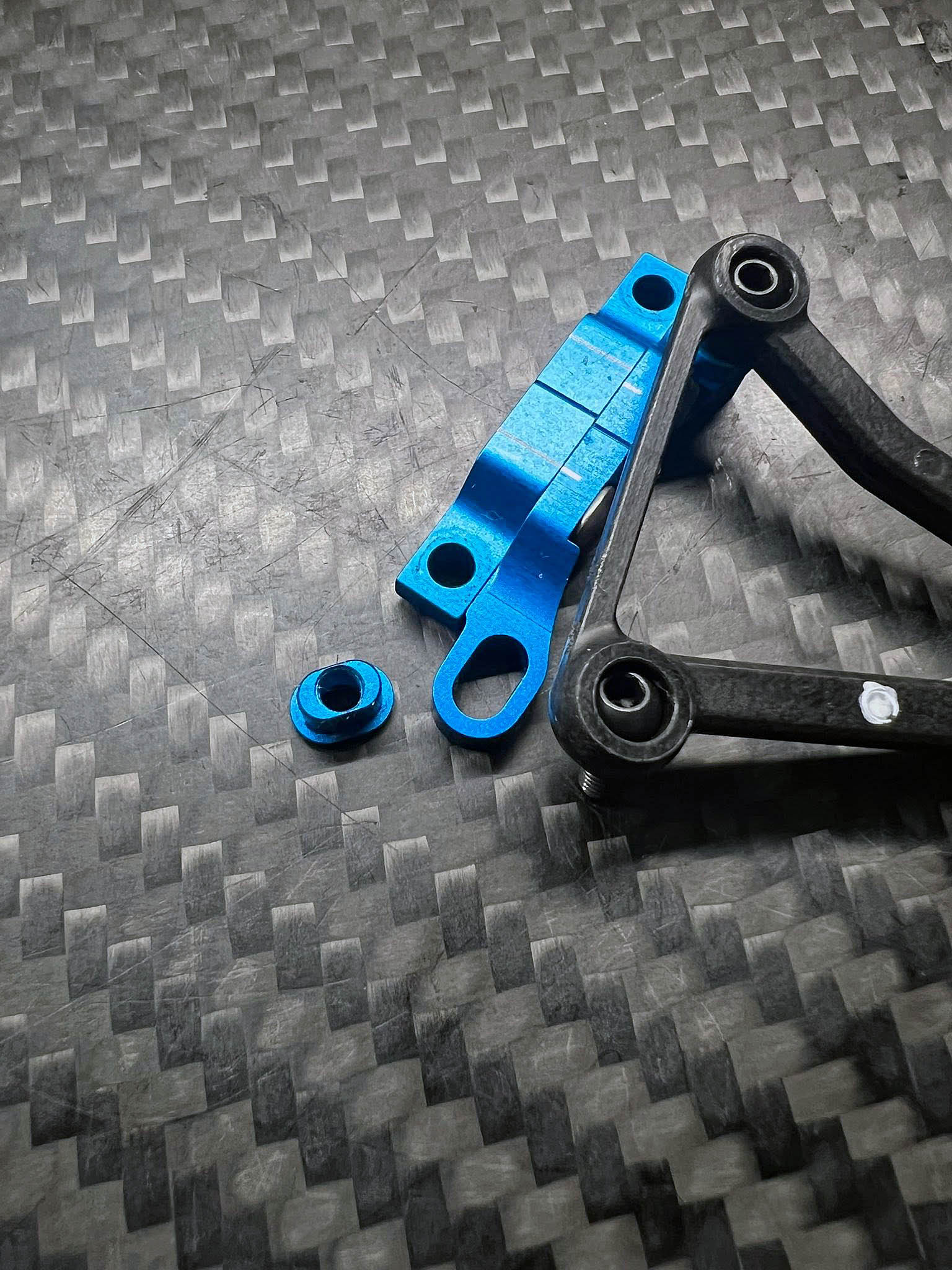
The 421X features updated lower arm geometry and materials.
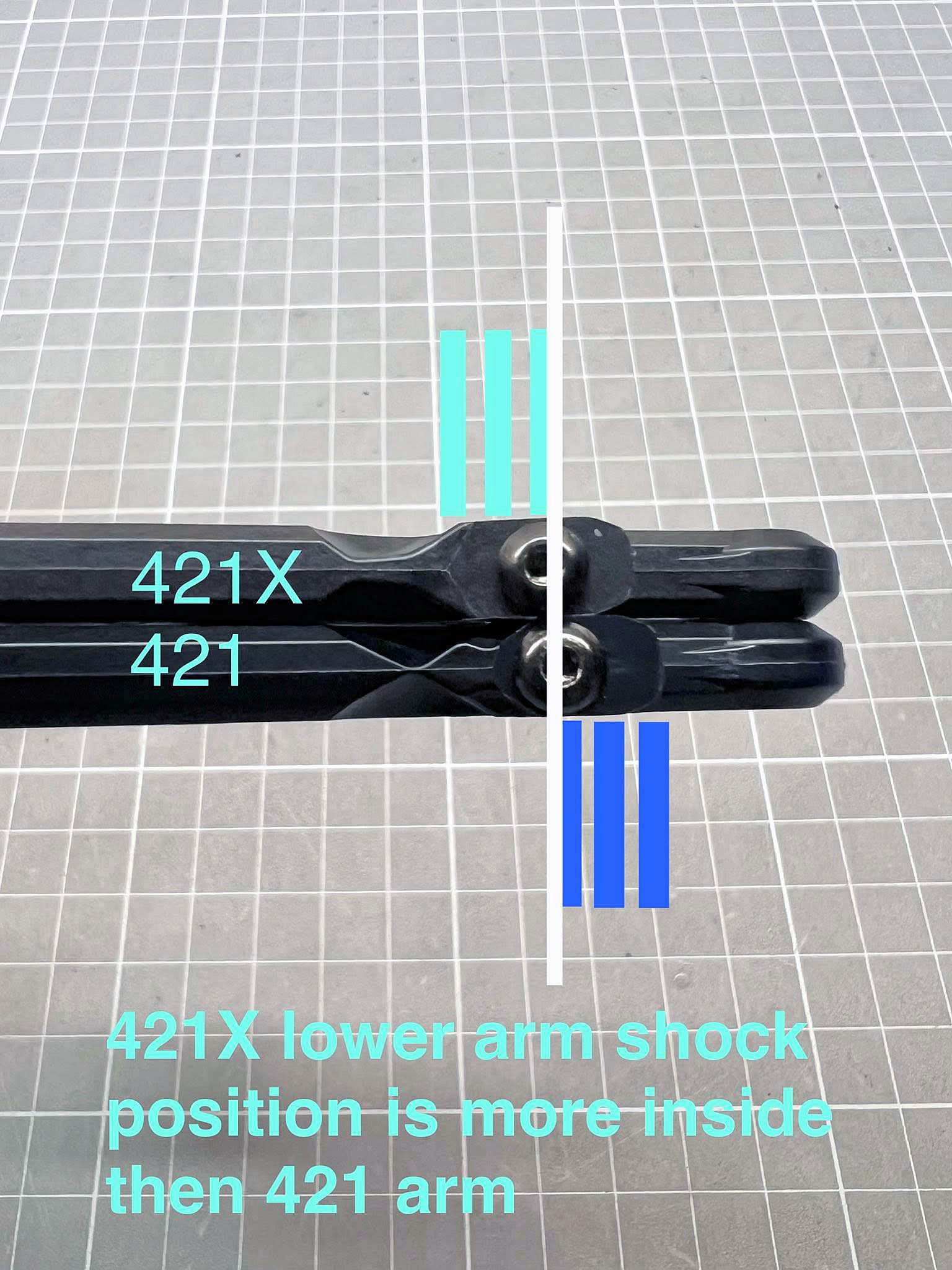
The shock position has been moved further inward, with the outermost position on the 421X set even further inward than the innermost position on the 421. This allows for a wider range of shock spring options, enabling even stiffer springs to function with better balance.
The material incorporates a high proportion of carbon composite, resulting in exceptional stiffness. This suppresses changes in stiffness due to heat, allowing the suspension to reliably support the load even under high grip conditions.
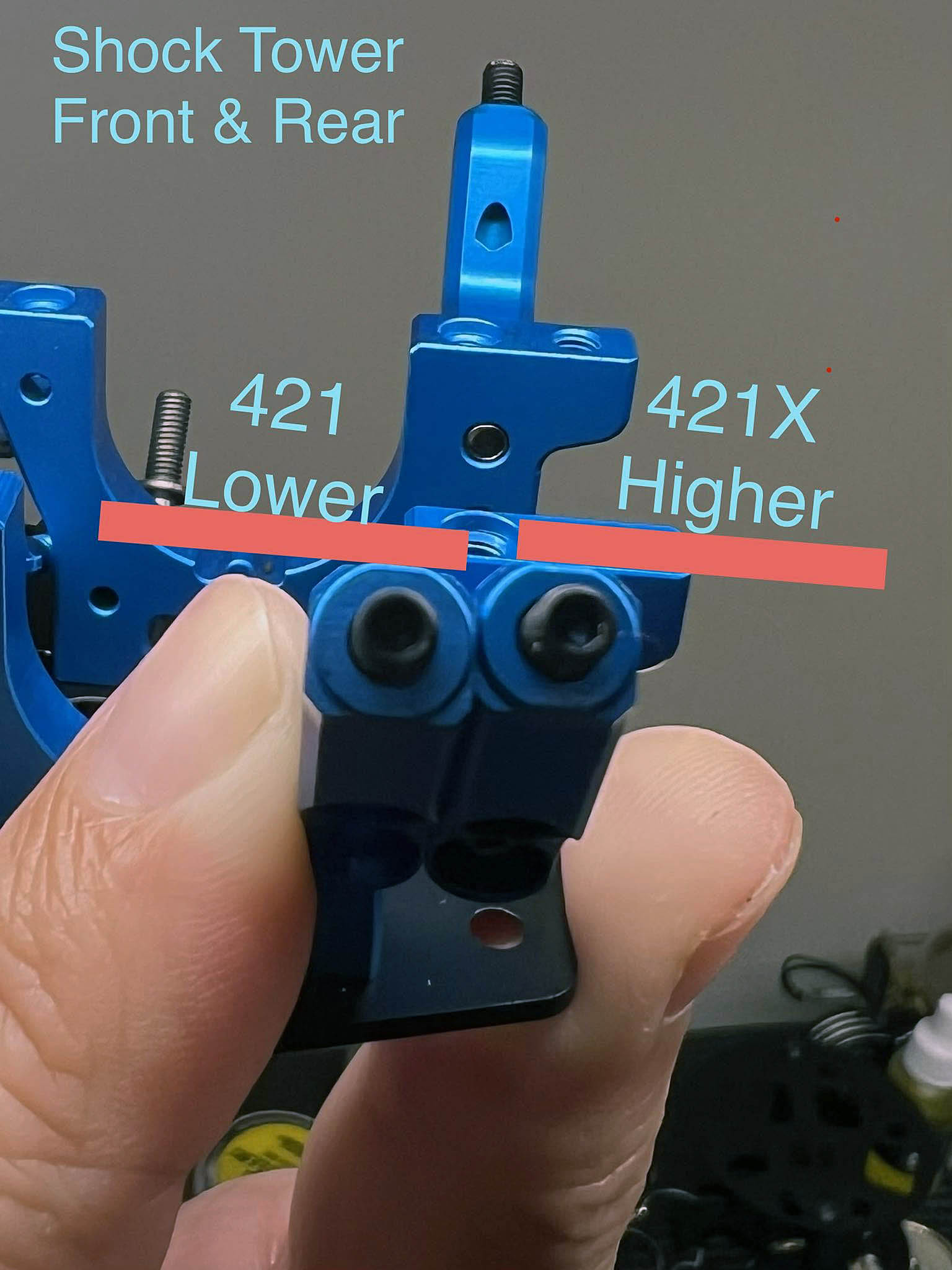
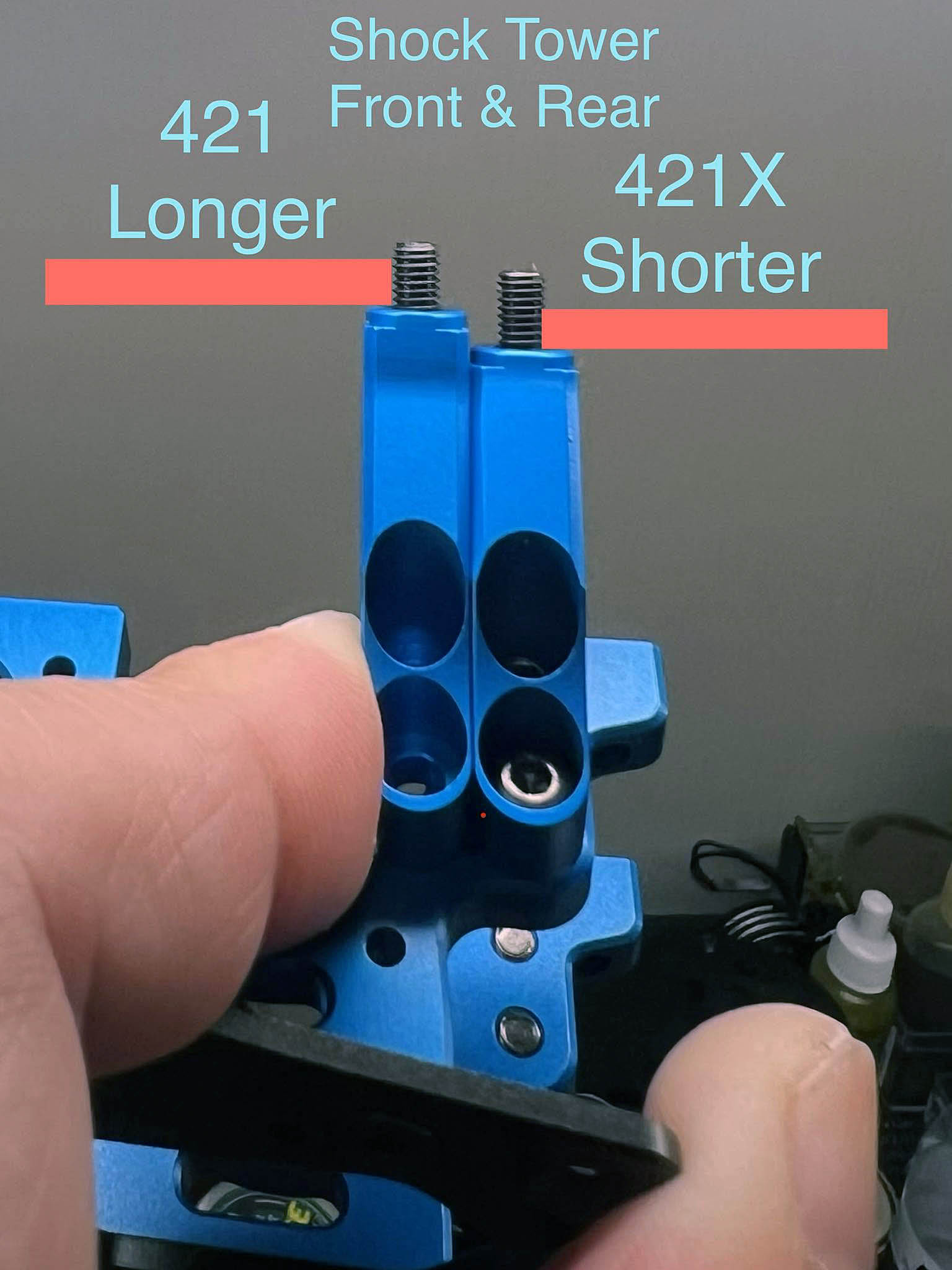
This shock mount features a refined shock angle and up travel to the shock position being set further inward. If you have plan to put 421X arm on your 421, you "must" use this shock mount at the same time.
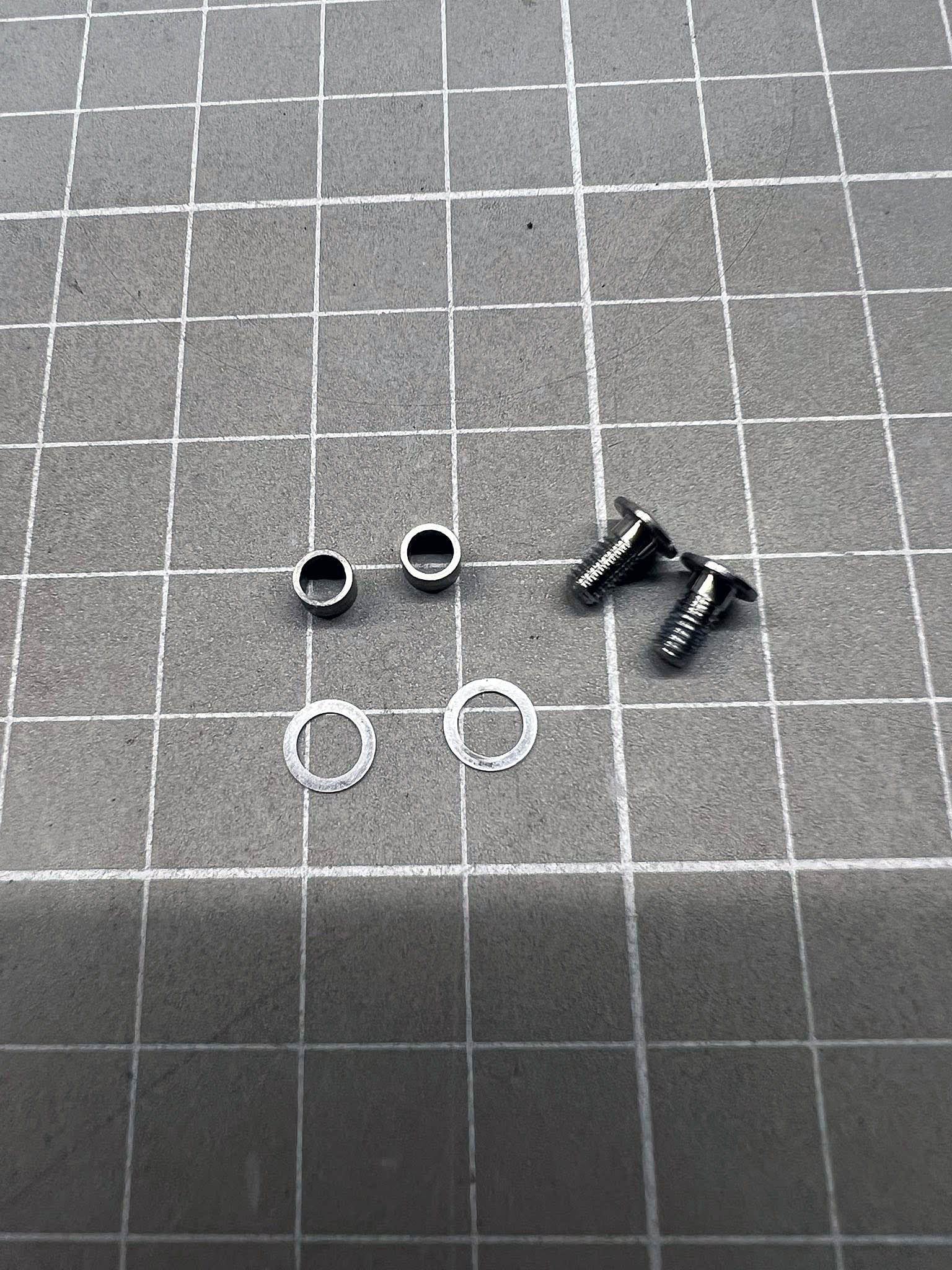
Introducing the 421X Update Parts Compatible with the TRF421
Knuckle Arms
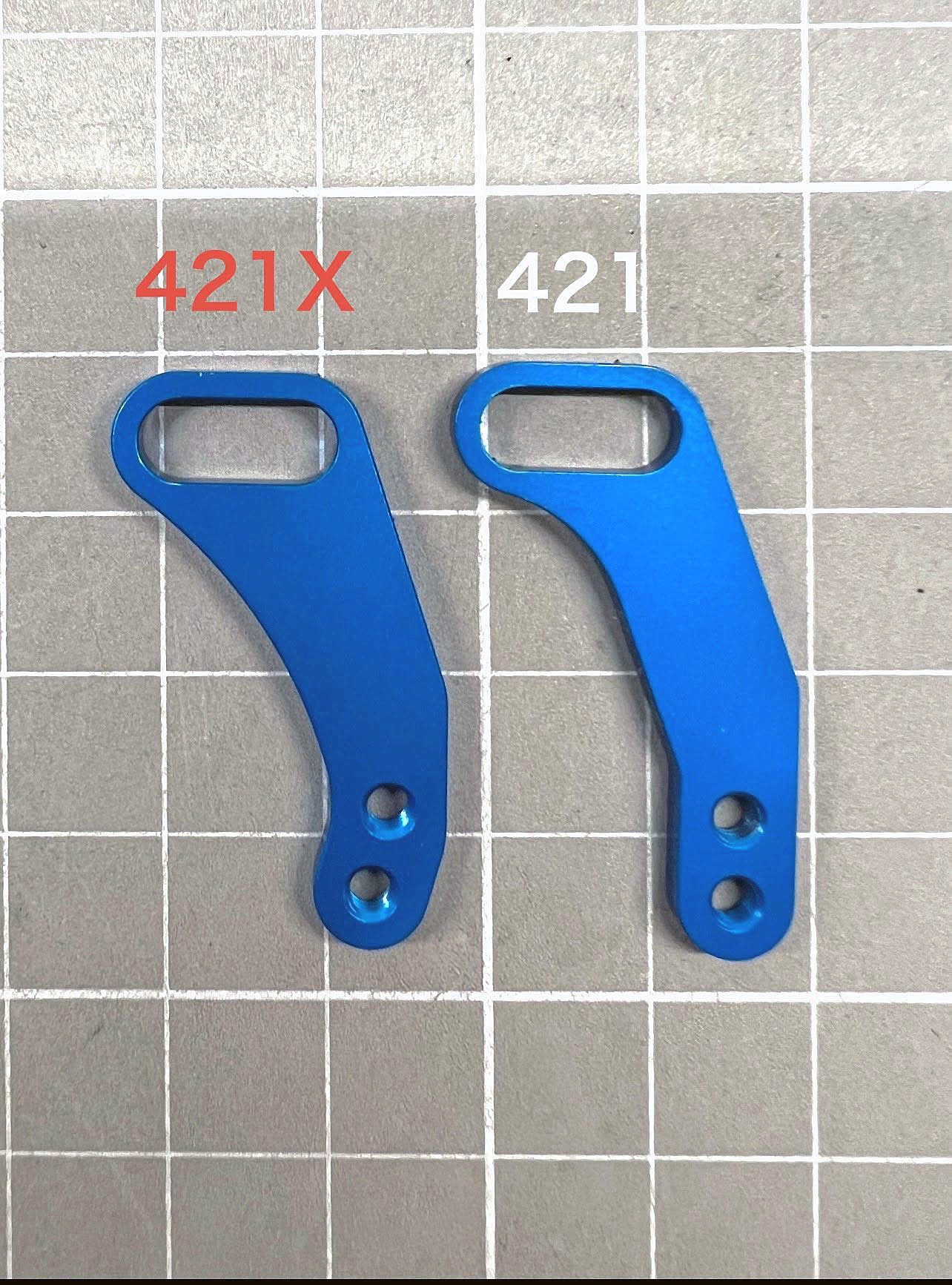
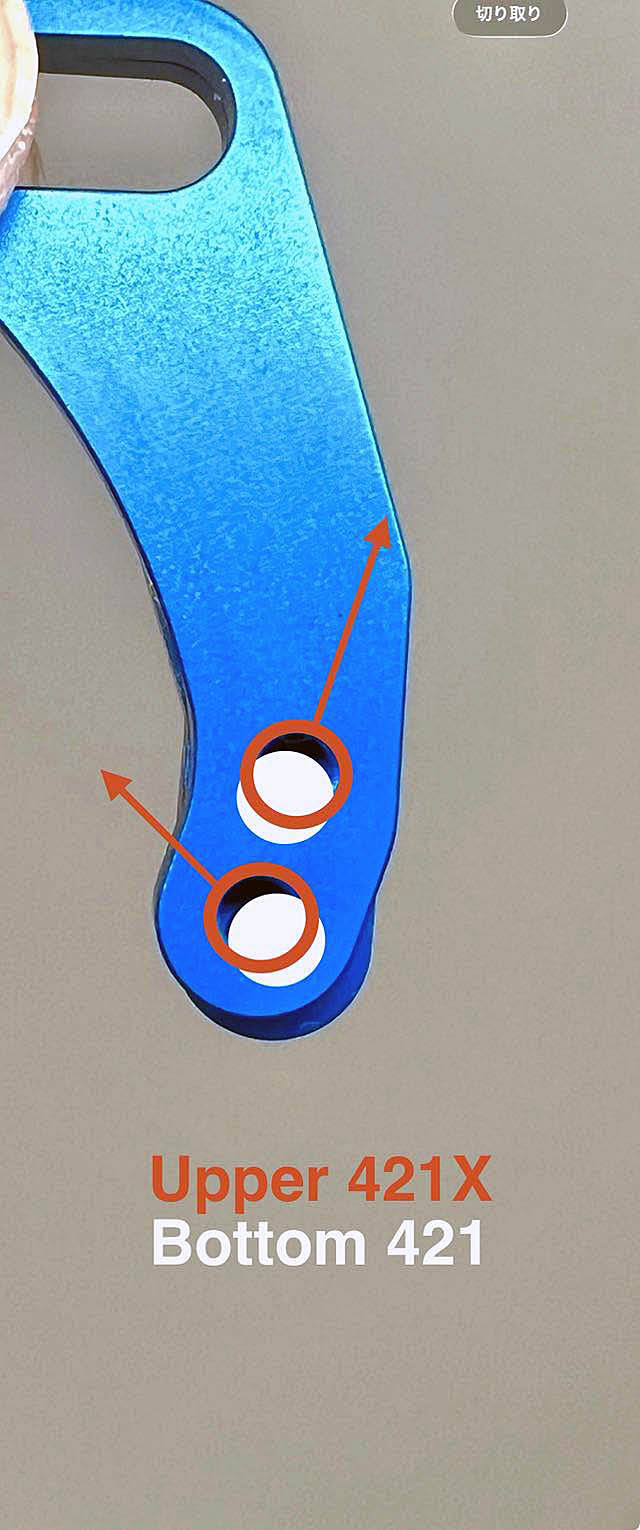
Although these are universal parts for both front and rear, the hole positions on the front knuckle arms are set slightly further outward (toward longer links) and slightly forward compared to the previous model. This design allows the car to trace a stable arc from the moment you begin turning the steering wheel through the corner, enabling you to make more aggressive steering inputs.
For the rear, the hole positions have been moved rearward and slightly inward. This increases toe in variation, resulting in a setup that maintains rear grip more effectively during cornering.
Consider this update as a tuning part. By switching between the new and old 421 knuckle arms depending on the situation, you'll be able to achieve faster cornering performance.
|
|
|
Introduction of 421X Upgrade Parts Compatible with the TRF421
Front Bumper Support and Rear Body Mount
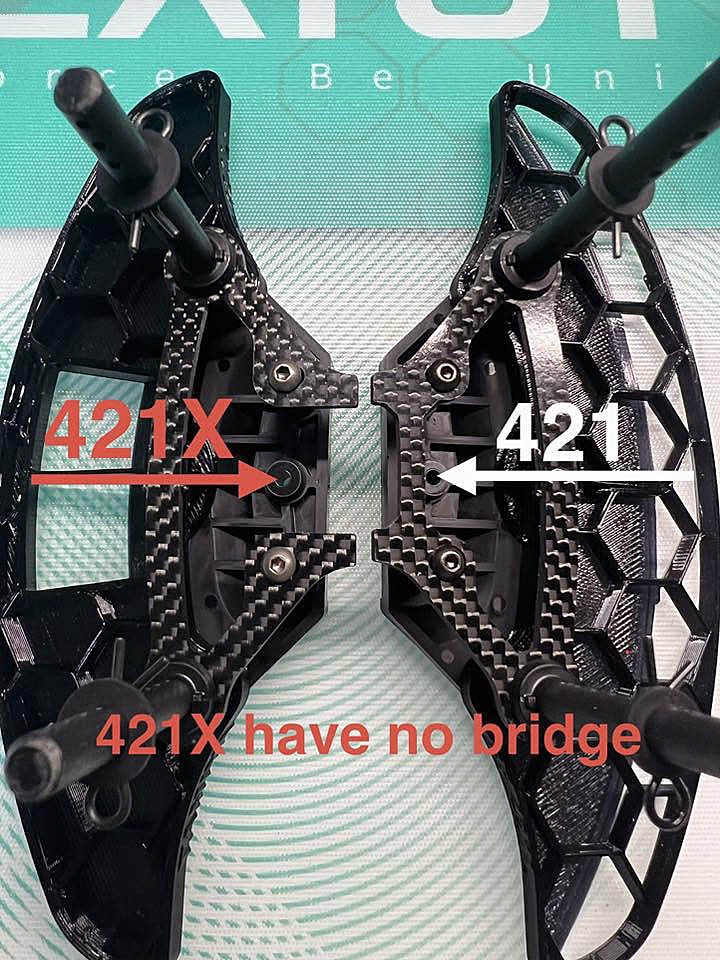
On the 421X, the bridge connecting the bumper support to the chassis side has been removed. By intentionally reducing the rigidity in this area, flex is resulting in a setup that offers a smoother response while still maintaining front tire grip.
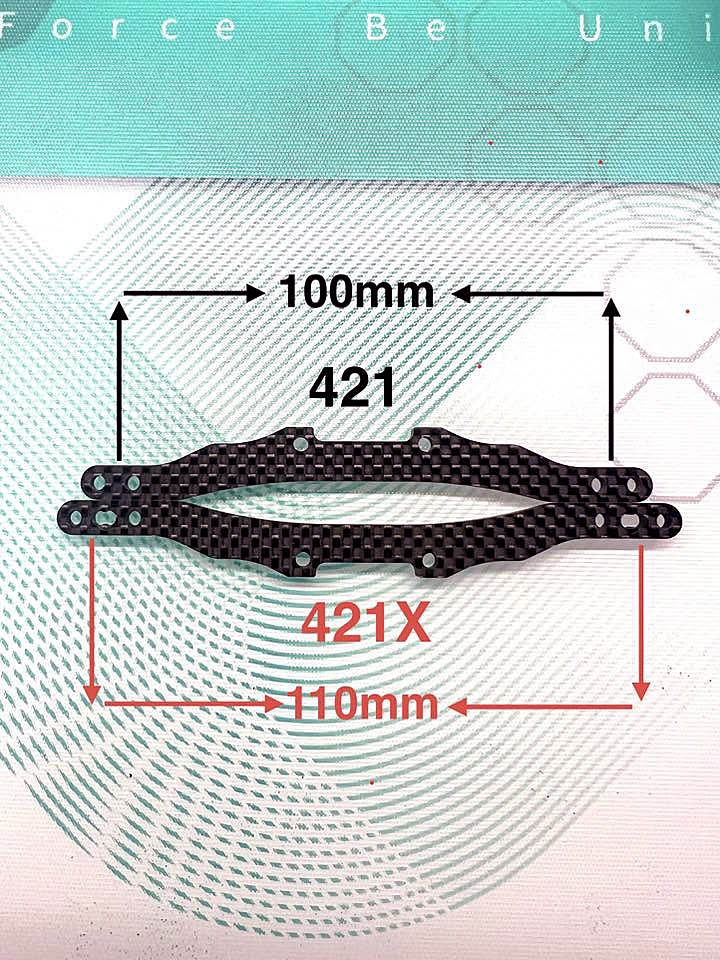
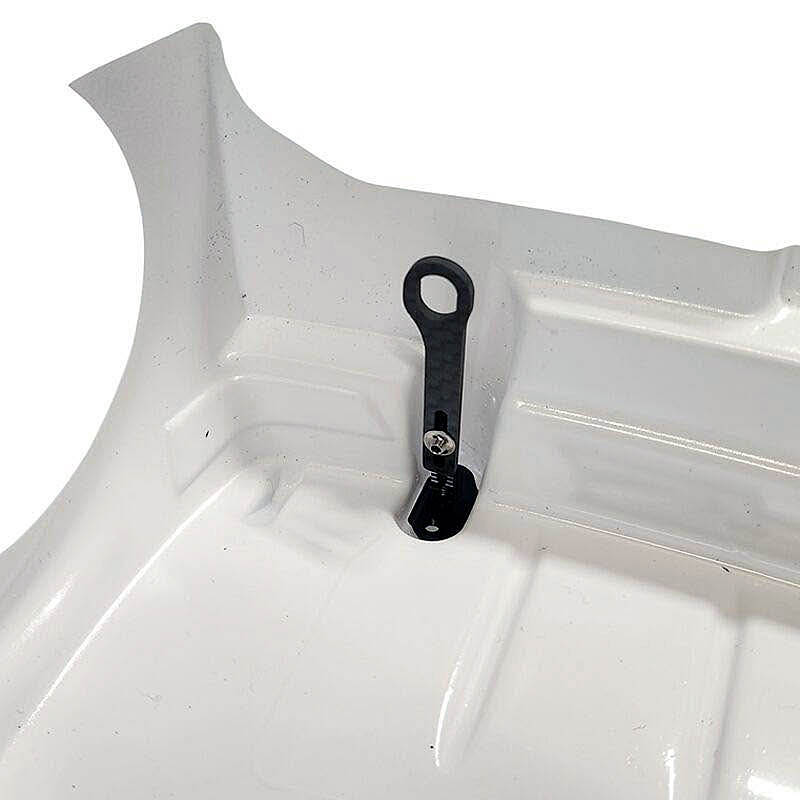
For the rear body mount, the 421 wap 100mm width between mounts, but the 421X features additional mounting holes, allowing you to choose a 110mm width as well. Compared to the 100mm option, the 110mm has improves rear grip stability during high-speed cornering.
I primarily use Inov8 horizontal body mounts, opting for Type 1 for the 100mm width and Type 3 for the 110mm width.
While these may seem like minor updates, you'll notice their effects more than you might expect during actual driving. These are highly recommended parts that can be easily installed on the 421!
This concludes detailed overview of the TRF421X updates.
Motor Mount
This part cannot be used on the older TRF421, it is a mount designed exclusively for the TRF421X chassis. if you switch to the TRF421X chassis, all other 421 parts remain compatible.
The most significant change is that the motor is mounted approximately 1mm lower, and the chassis has been milled to accommodate this new position. Some of you might think, "It's only 1mm..." but considering that the motor weighs about 130–160g, mounting it 1mm lower has a significant effect, making it easier to increase cornering speed by lowering the center of gravity.
It's not just about lowering the CG, the motor is moved further forward, and by selecting smaller spur and pinion gears, you can position the motor closer to the center of the car than before. This change should also have a significant effect when considering the motor's weight ratio.
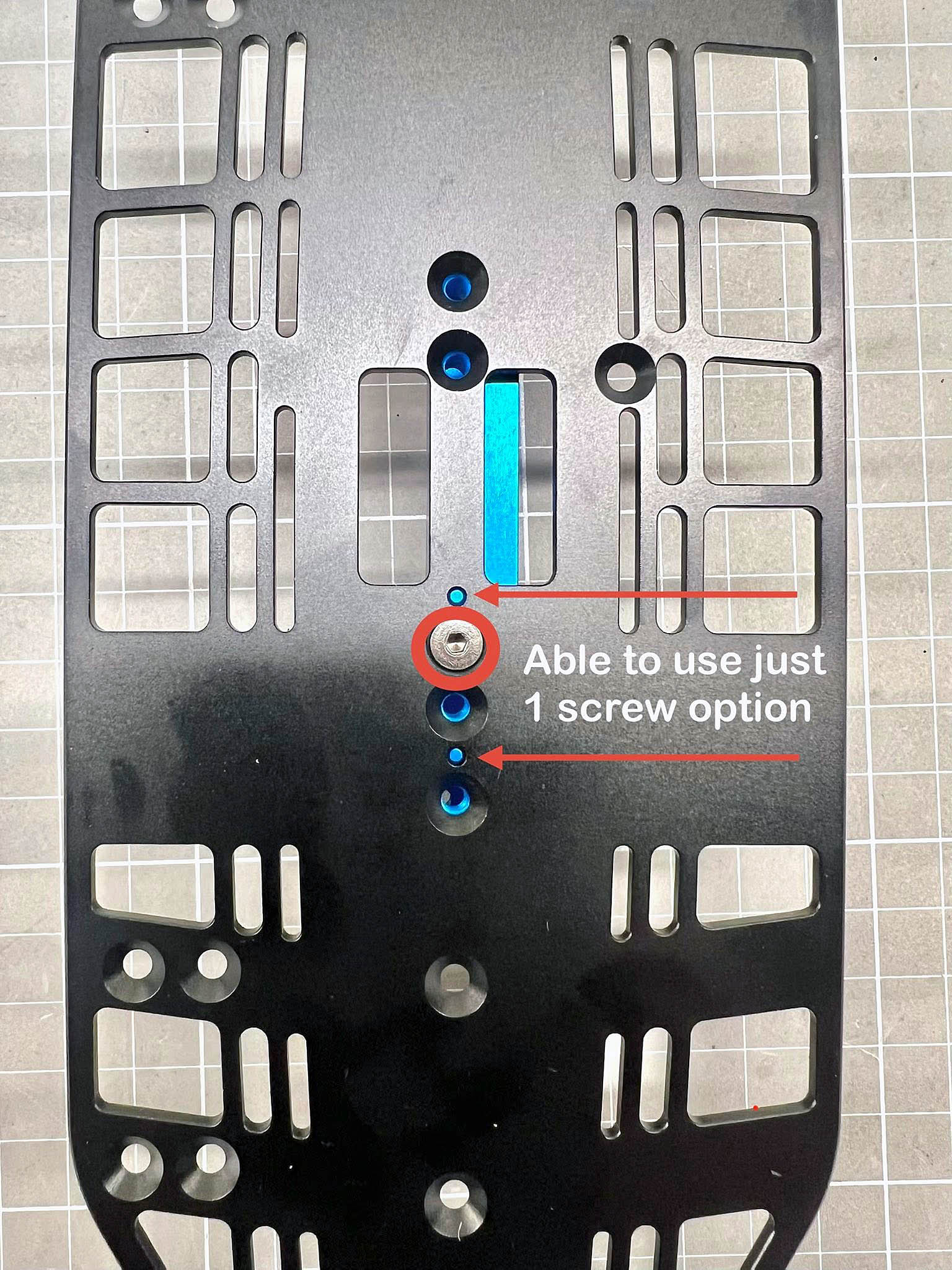
There is a protrusion on the bottom of the motor mount that fits into a hole in the chassis, preventing misalignment caused by crashes and enabling a "single screw mounting" for the flex adjustment screw something that wasn't possible with the previous model.
It's particularly effective on aluminum chassis, resulting in the most aggressive cornering.
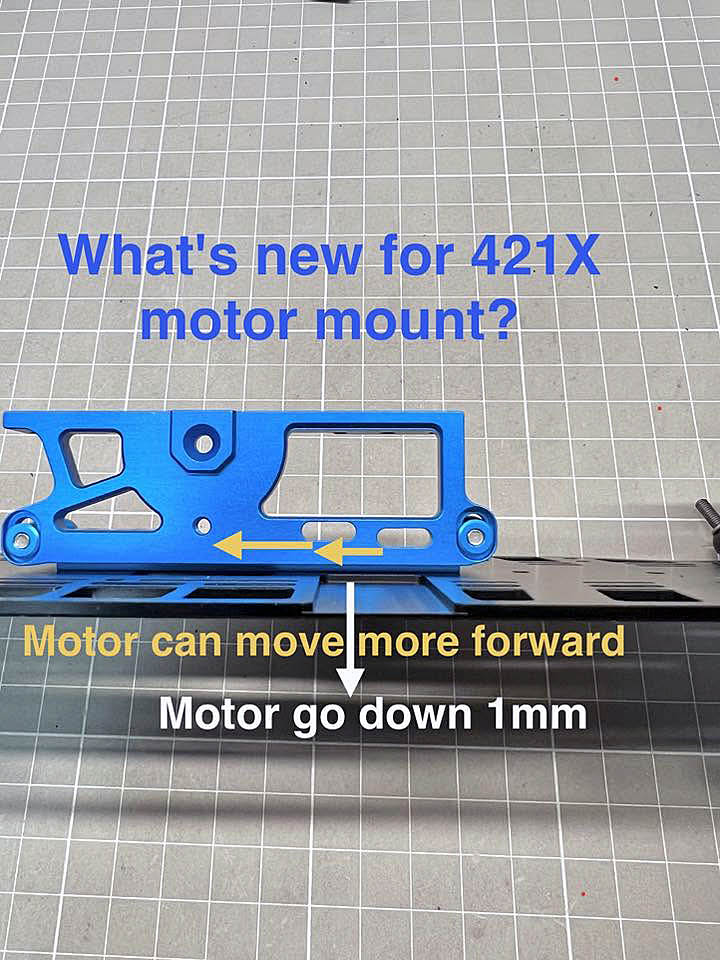 
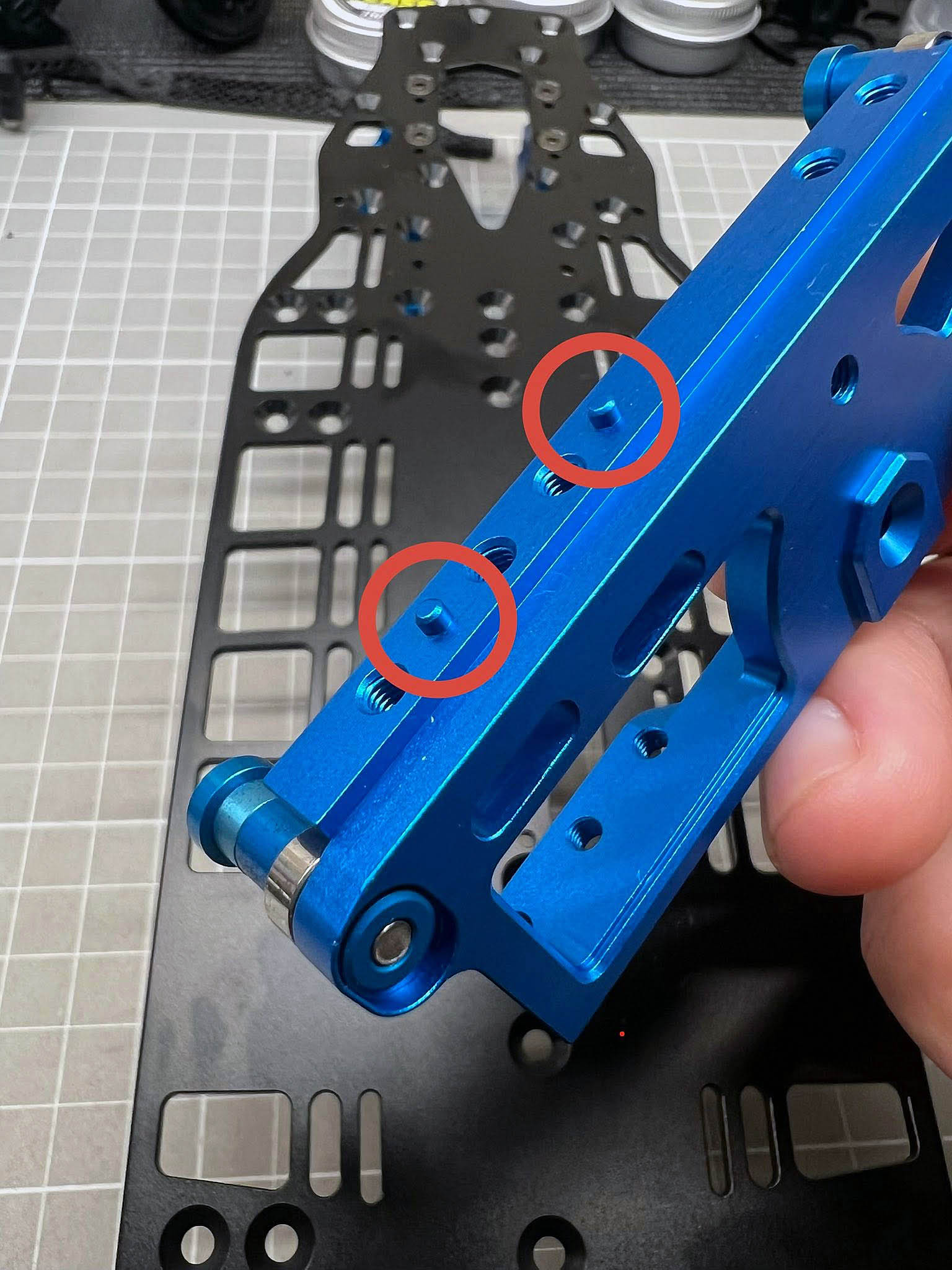 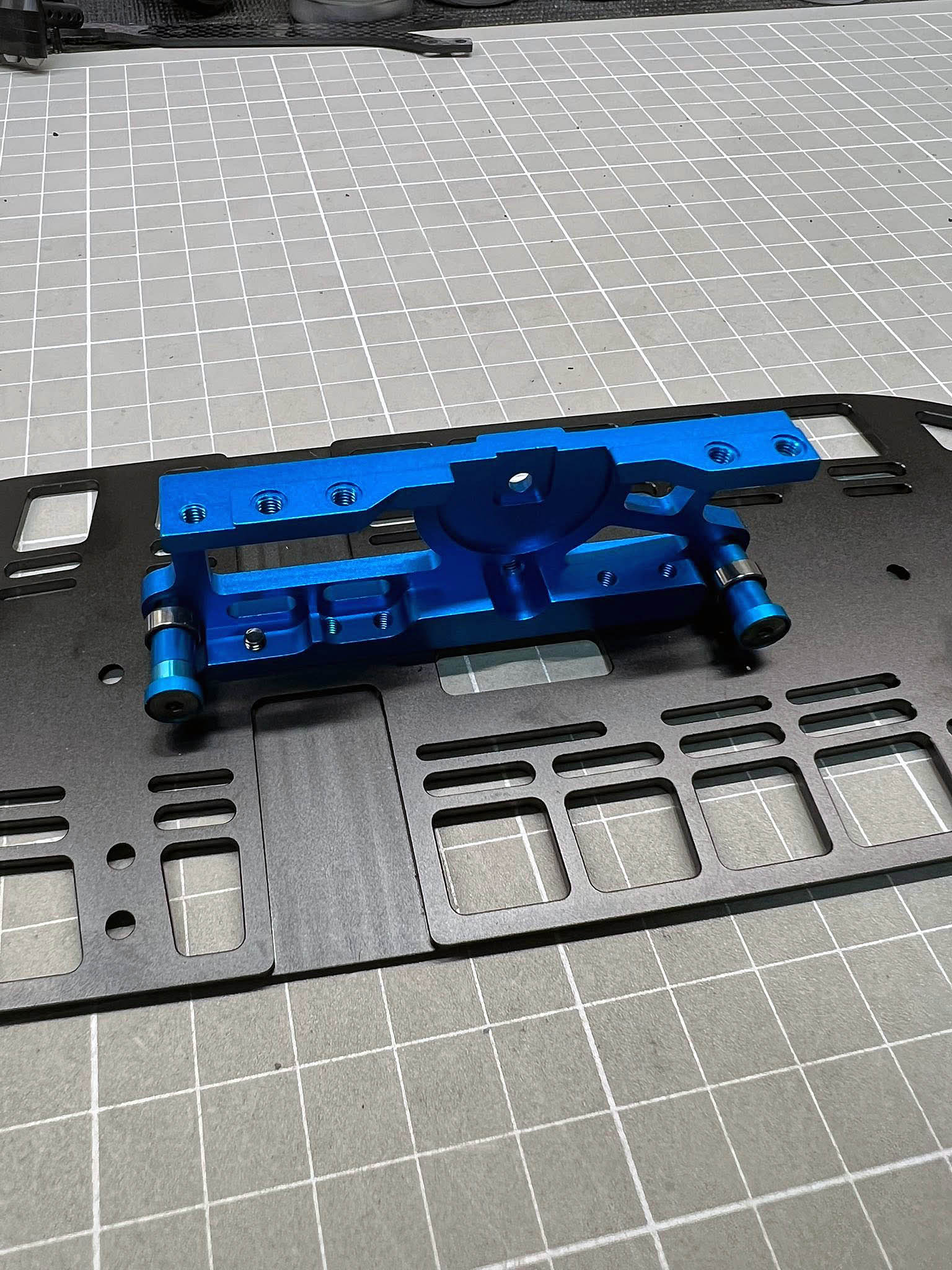
The TRF421X's motor mount has a approximately 1.2 mm lower motor position than that of the 421 and the forward offset has also increased.
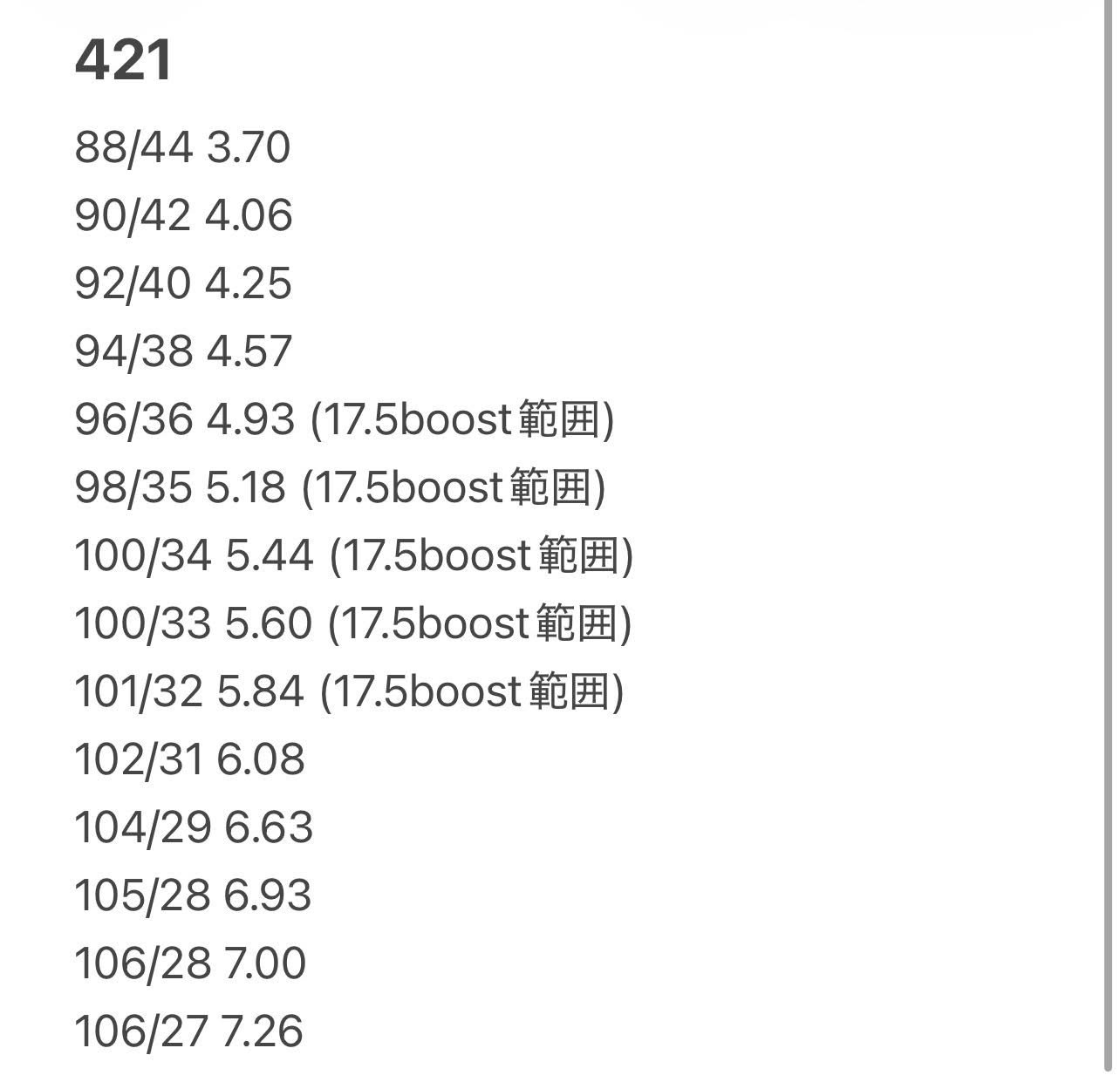
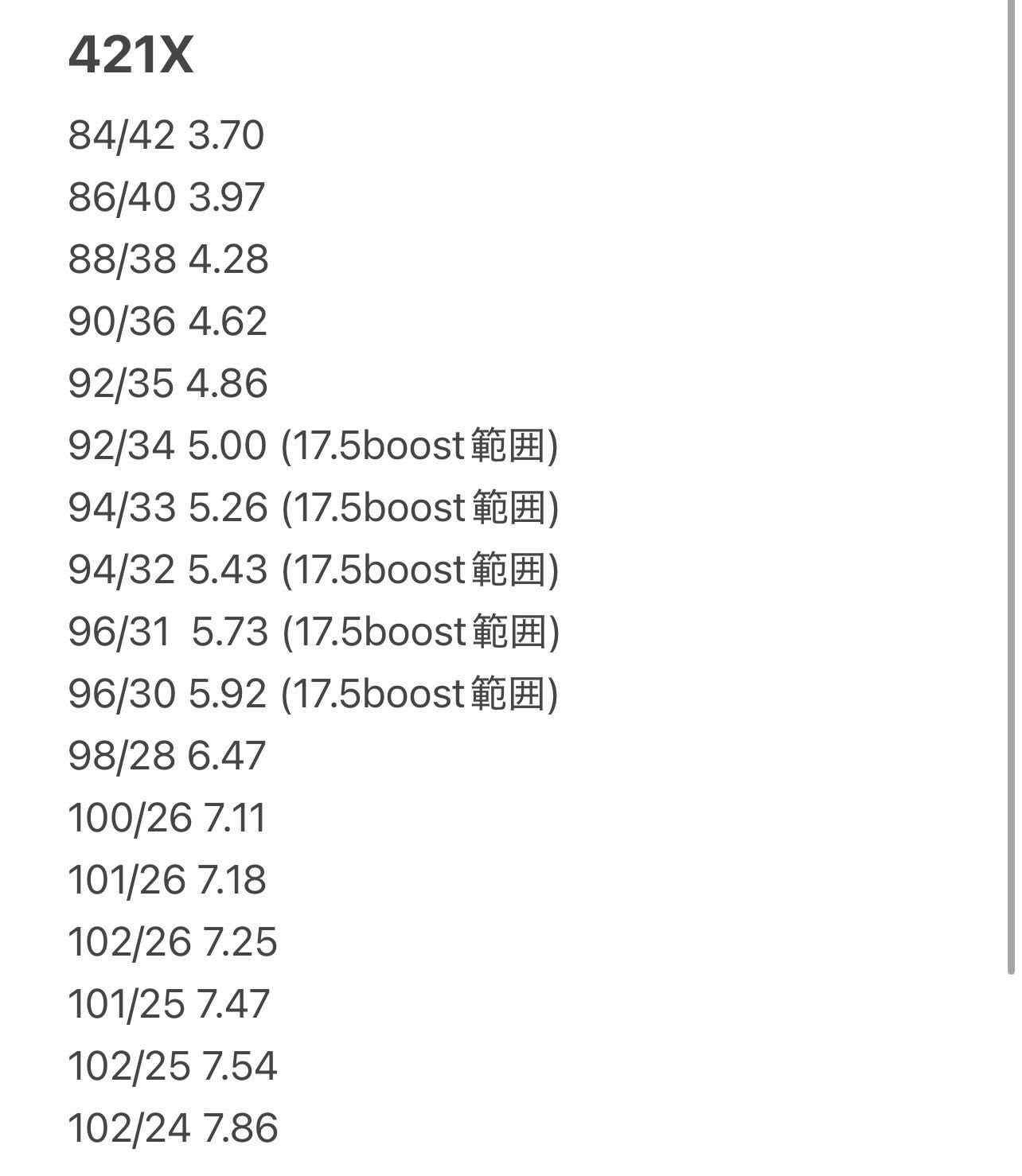
This allows the motor to be positioned closer to the center of the chassis by selecting smaller spur and pinion gears.
When i tested the actual amount of offset for the same gear ratio, I found that for the same spur gear size the pinion gear could be made about 6–7 teeth smaller (with some variation depending on the manufacturer of the spur gear and motor, shows number for 64-pitch/0.4-module gears).
This allows you to select a smaller spur gear than before. Using a smaller pinion gear to the motor position moves forward and altering the weight balance. Furthermore, this leads to lighter rotating components, which is expected to result in an overall increase in corner speed performance.
We strongly encourage TRF421X users to use this information as a reference and aim for even greater performance improvements by finding your preferred motor position!
|