First of all, I'm very happy that I achieved better results than I had aimed for in my first All Japan Championship.
Initially, I couldn't cope with the changing bumps and grip of the road surface depending on the time of day, and I couldn't even drive properly for eight minutes.
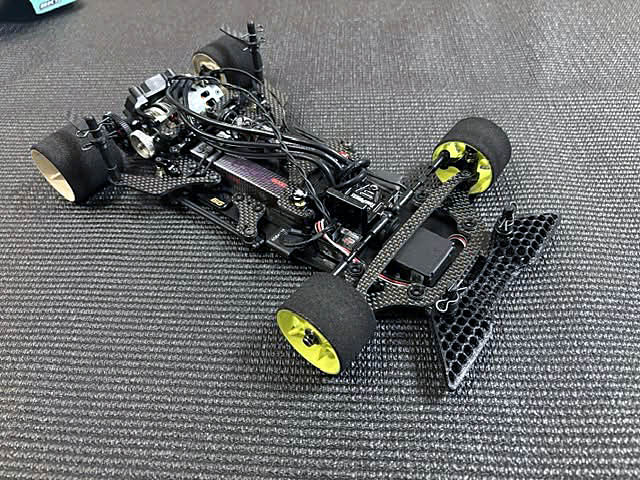
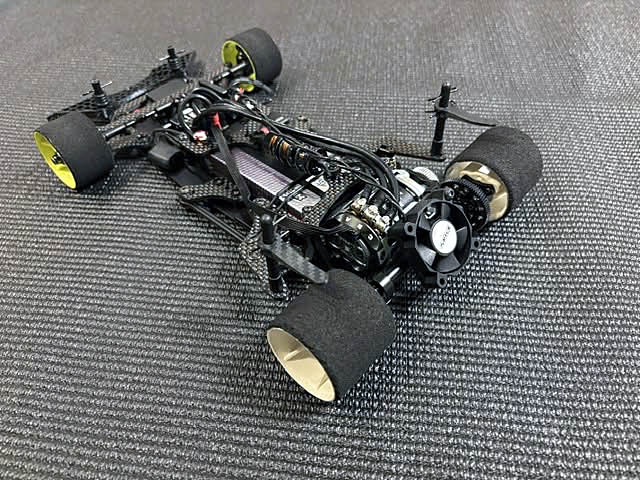
The car's performance improved on the practice day before the EPS-J. Since I was using a ROCHE chassis, Team ROCHE driver Watanabe approached me and took time out of his valuable practice to look at my car. He checked the springs, oils, alignment, etc., and gave me advice on tire diameter, ride height, etc., which completely changed the way I drove.
Even then, I struggled to cope with the changing road surface conditions, but I received advice from Watanabe again, and by changing the rear axle from a carbon shaft to a steel shaft, I was able to reduce the loss of speed in corners. Also, I changed the kingpin angle from 4° to 5°, and since the tire diameter I had prepared was a little too large, I made it slightly smaller before driving, which made driving much easier.
I couldn't go to the All Japan Championship the day before, so I went into it on the day of the competition without any prior practice. During the competition, I was allowed to visit Team ROCHE's pit and was able to see the works driver's pit work up close, which was very educational.
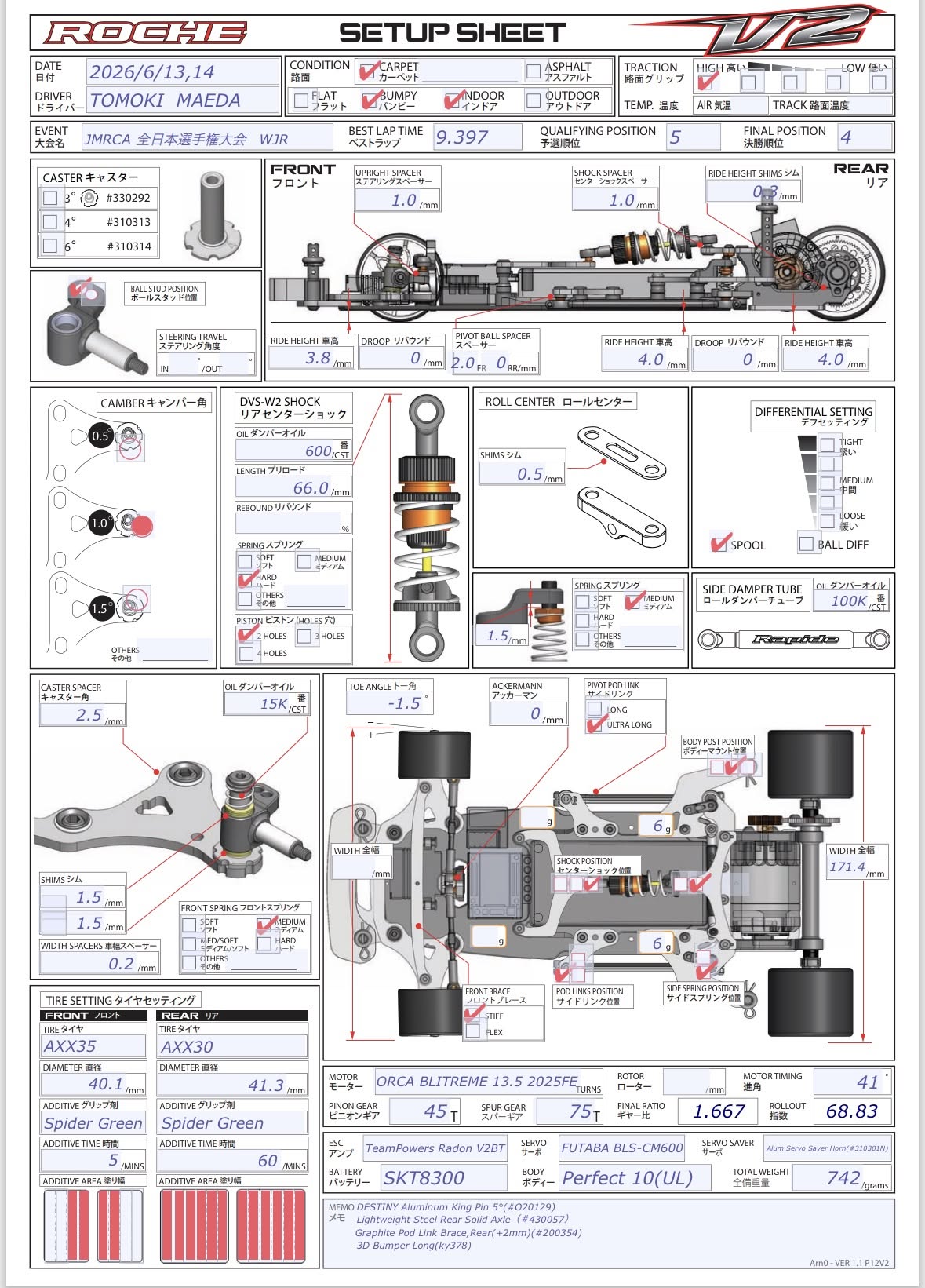
In qualifying, I was concerned about the front tires catching, so I received advice from the team members and made the following changes:
- Changed the front tire diameter from 40.3 to 40.1, and changed the grip compound application width to 1/3 (I always use shoulder glue).
- Changed the steering spacer from 0 to 1mm.
- When adjusting the front ride height, I changed the 1.5mm shim between the top of the knuckle and the bottom of the spring to a 1.5mm collar used for rear axle width adjustment and attached it above the spring, which improved the kingpin's movement.
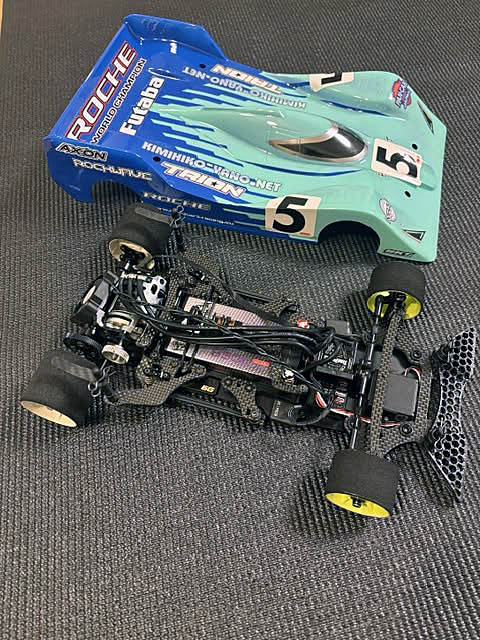 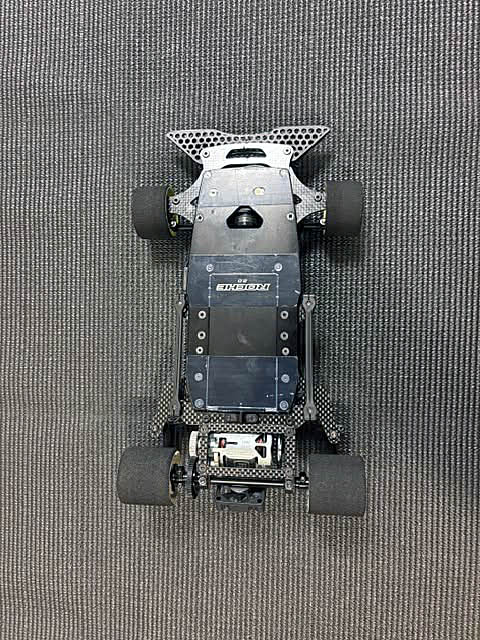 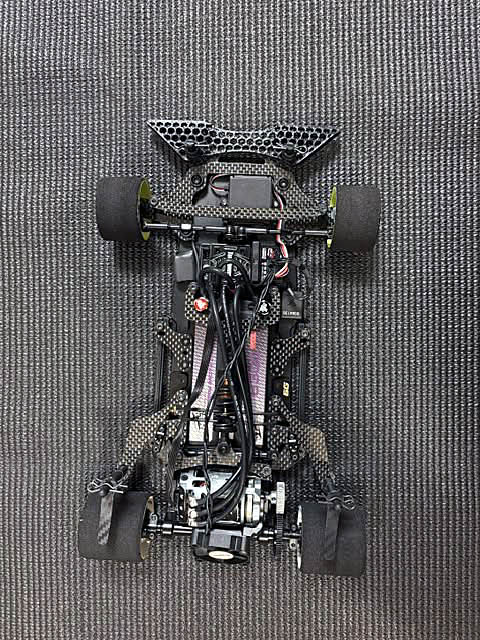
|