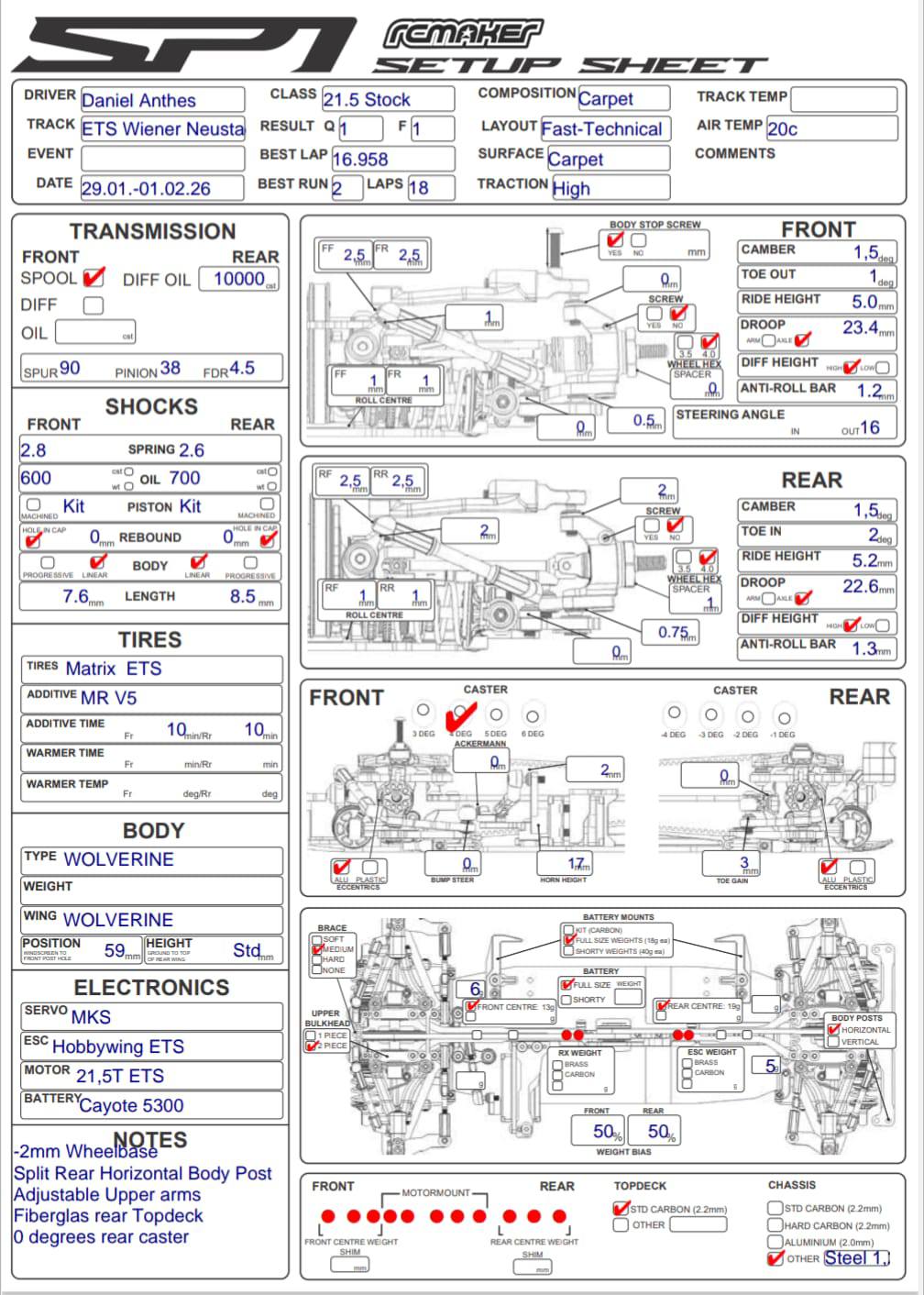
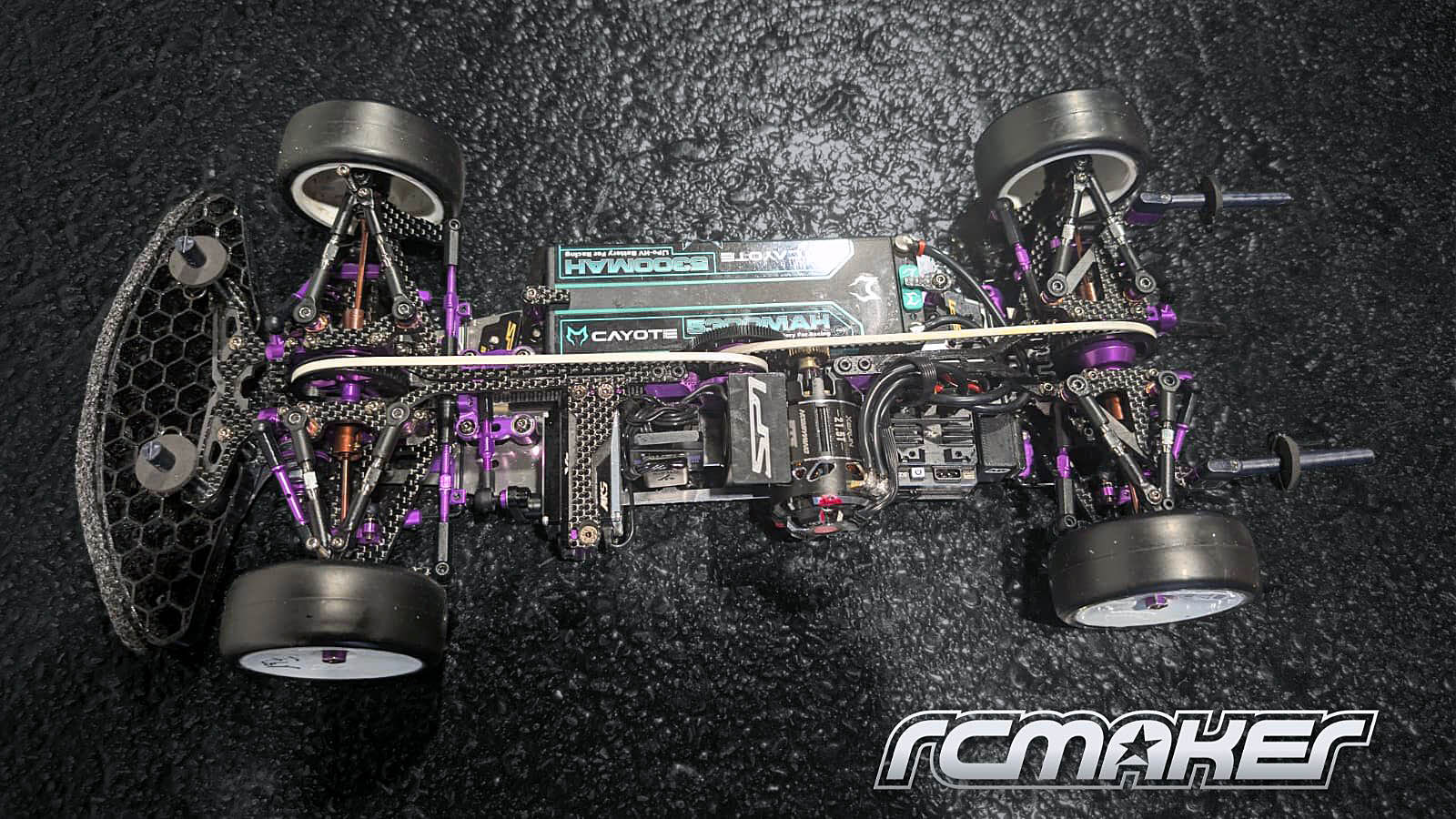
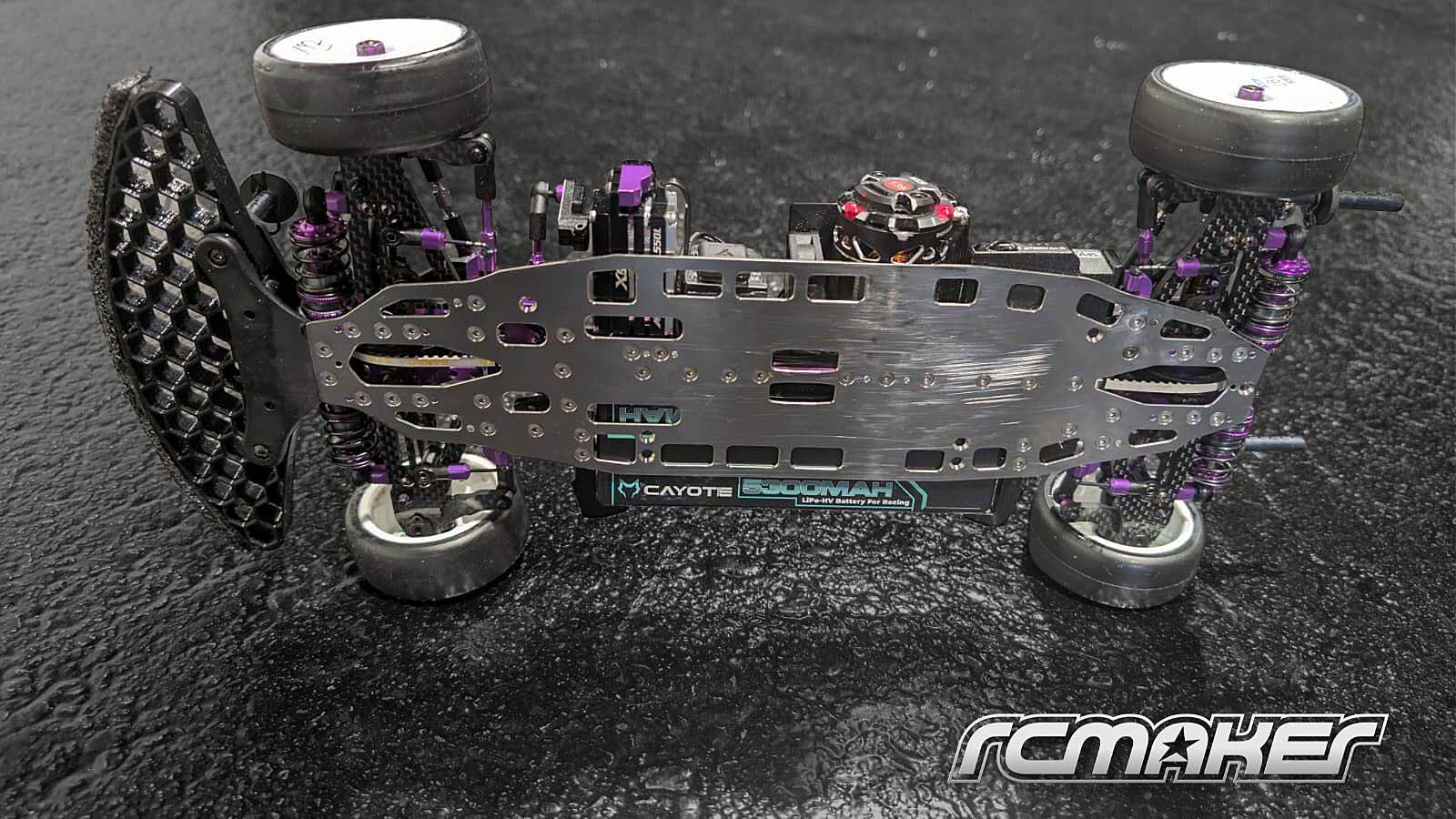
During the ETS, we tested these setup changes in the qualifying rounds, focusing on improving drivability, consistency, and overall corner speed under race conditions. Here’s an overview of the key changes compared to our baseline setup. Including our on-track impressions:
Rear caster reduced from 2° to 0°
This makes the rear end feel freer and less “locked in.” The car rotates better through the corner and feels more agile overall without becoming nervous.
ARS increased from 0 mm to 3 mm (more toe-in under load)
This allows the rear toe to close slightly under load, resulting in much better stability on corner exit and more controllable traction when accelerating.
Roll center adjustment (front & rear)
Front outer from 2 mm down to 0 mm, rear set to 0.5 mm.
This made the car noticeably freer, especially in long, high-speed corners. At the same time, we gained more corner speed while keeping the car calm and predictable.
Spring change – front from 2.5 to 2.8 (stiffer)
The stiffer front spring improves stability during turn-in and quick direction changes. The car rolls less over the front axle, feels more precise, and remains calmer overall, especially at higher speeds.
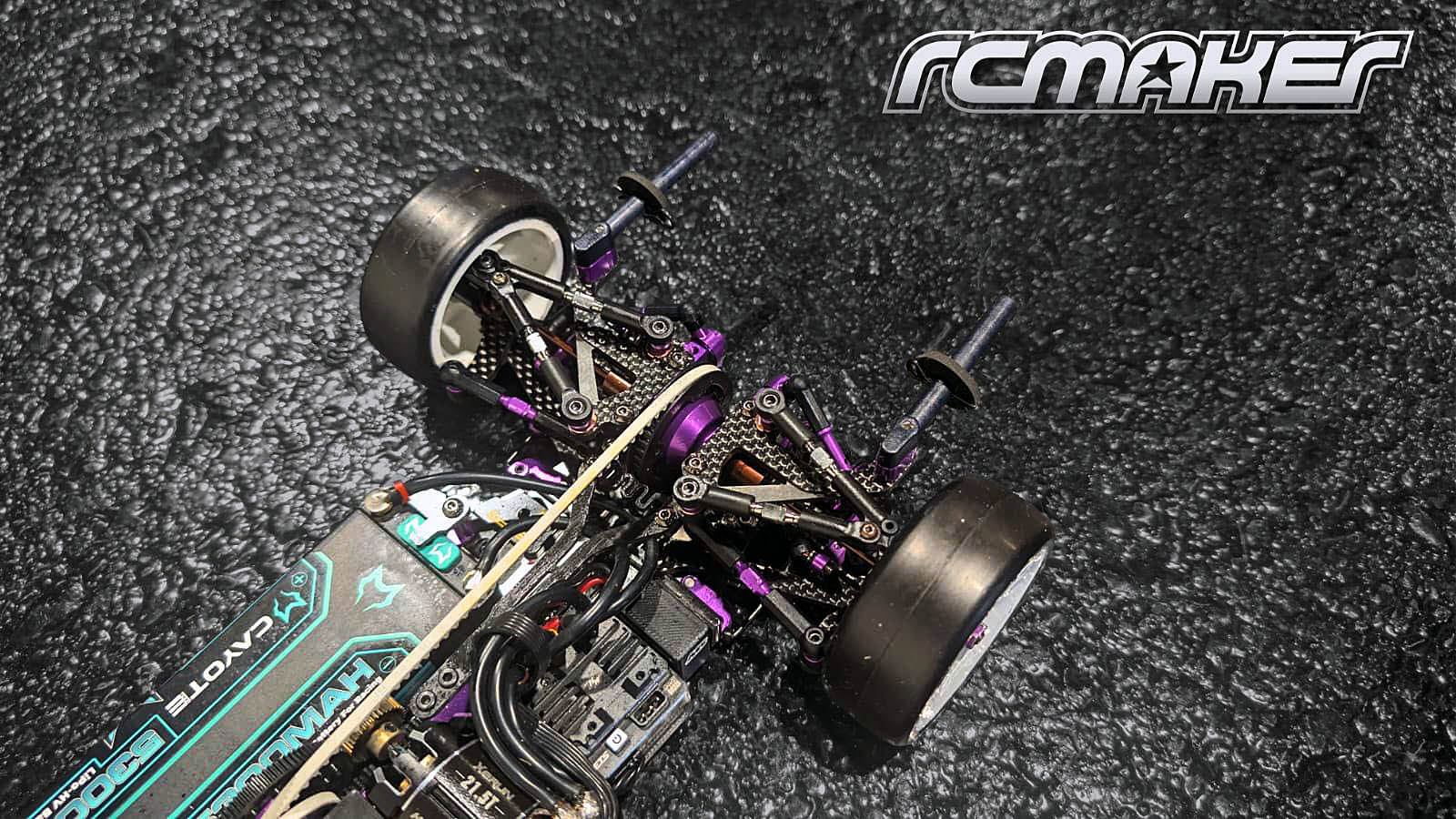
Center weights fully screwed down (no shims)
All screws installed, no shims. increased chassis stiffness.
This improves precision, stabilizes the car, and increases corner speed due to reduced chassis flex.
Servo horn reduced from 19 mm to 17 mm
This makes the steering less aggressive and more controllable. The car feels smoother around center and is easier to drive consistently.
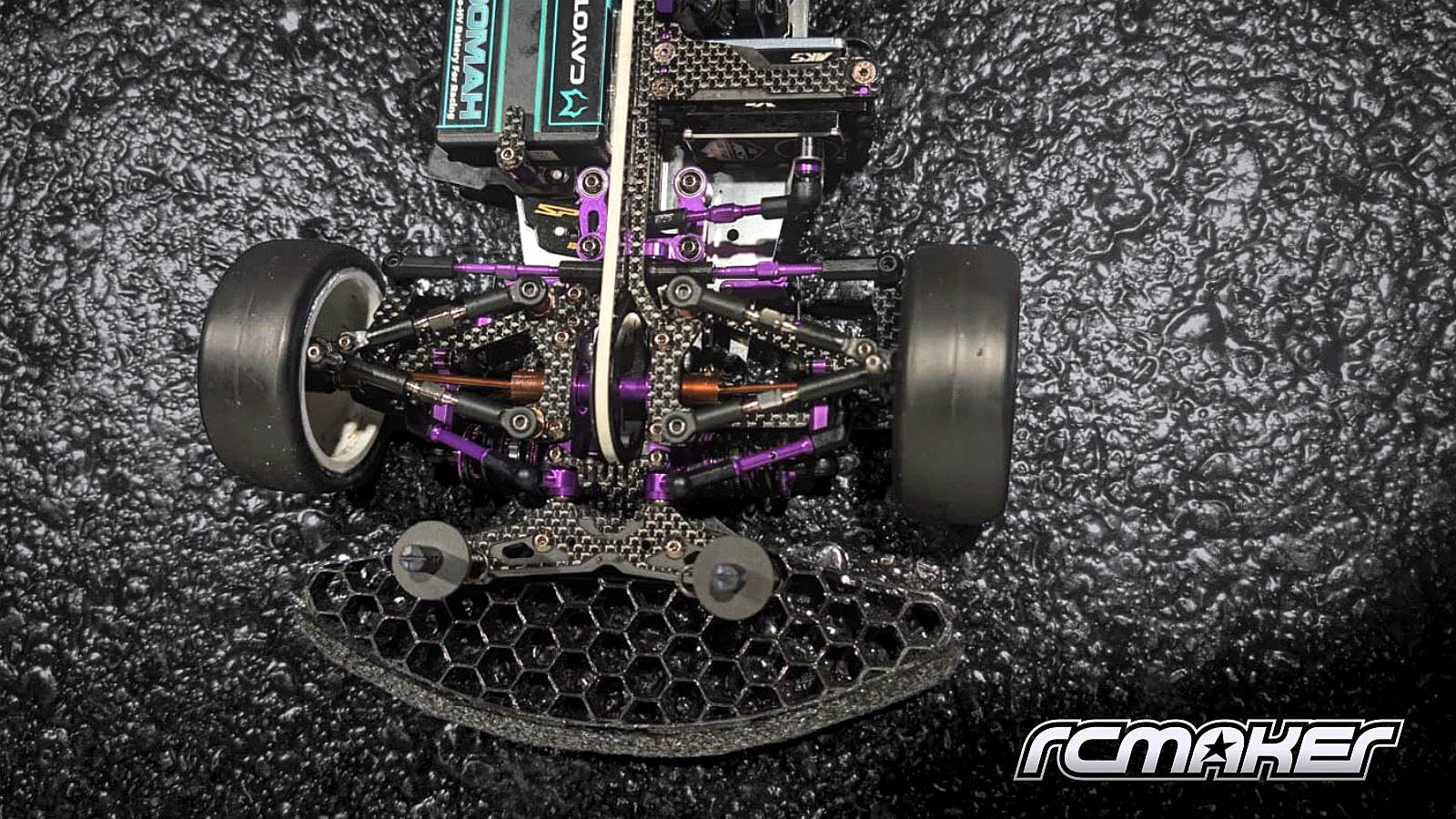
Front top deck – from full cut to no cuts
More stiffness in the front end. The car still has good initial steering but remains more stable through the corner, allowing higher corner speed without folding.
Switch to adjustable RC Maker arms
Compared to the kit arms, these provide noticeably more traction and a more precise driving feel. The car feels freer, easier to place, and gives better feedback.
|