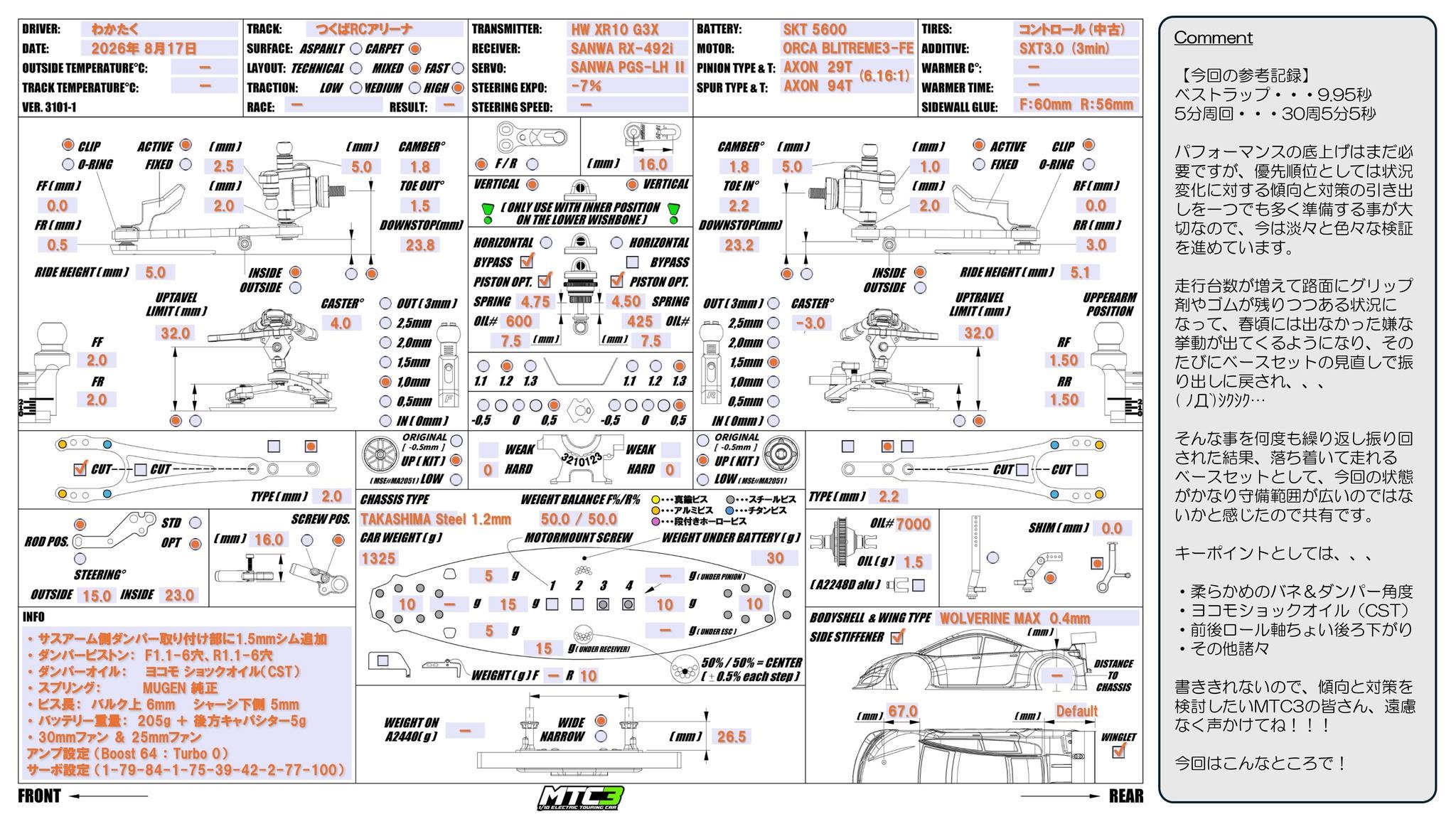
The carpet surface at Tsukuba RC Arena inevitably changes depending on the number of cars running and the tires used; consequently, when chasing peak performance, the setup tends to become extremely specific-a "pinpoint" setting. If you don't hone your ability to make fine adjustments based on the day's conditions, you can easily get lost in the process.
That's why I've been working hard to build up a repertoire of adjustments, but achieving both high performance and a reliable set of tuning options isn't easy. Damn it! lol
Here are a few key points based on my own observations:
Body Selection
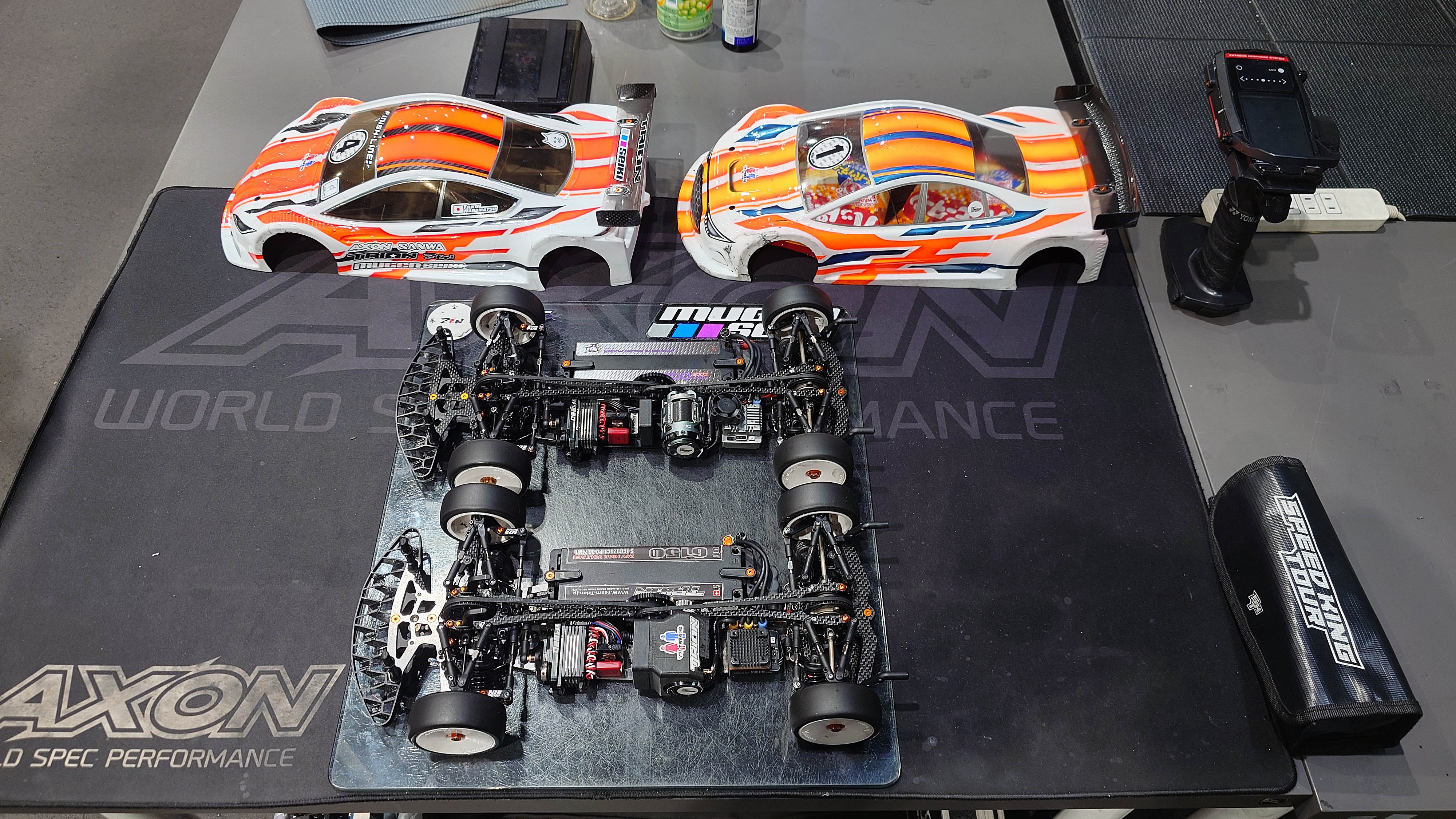
I almost exclusively use ZooRacing bodies. For this event, I plan to switch between the standard "Wolverine MAX" and the latest "Jackal" depending on the situation.
The Wolverine is my go-to, but when track conditions get tricky and the car starts exhibiting annoying, twitchy behavior, the Jackal-which offers significantly more downforce-becomes a highly effective weapon.
As for other bodies, it largely comes down to personal preference, but the general trend for this All-Japan Championship suggests that bodies which "plant" the car with downforce yield better results than those with a lighter, more agile feel. So, there's a pretty good chance I'll end up racing with the Jackal...
Also, just for reference-though I won't be using it myself (lol):
Among the "Twister" series, the new "Zenith" likely offers the most downforce. I tested it, but the balance of its movement didn't suit my driving style, so I ruled it out. That said, it is unrivaled in terms of how firmly it holds down the front end; if you can find a balance that works with it, it could be a massive advantage. If you feel that agile movement translates to better performance, the Wolverine MAX or the Ghibli 3.0 (Lenz Body) are great choices. Many drivers achieve a strong pace with either of these.
Tire Setup (Shoulder Gluing)
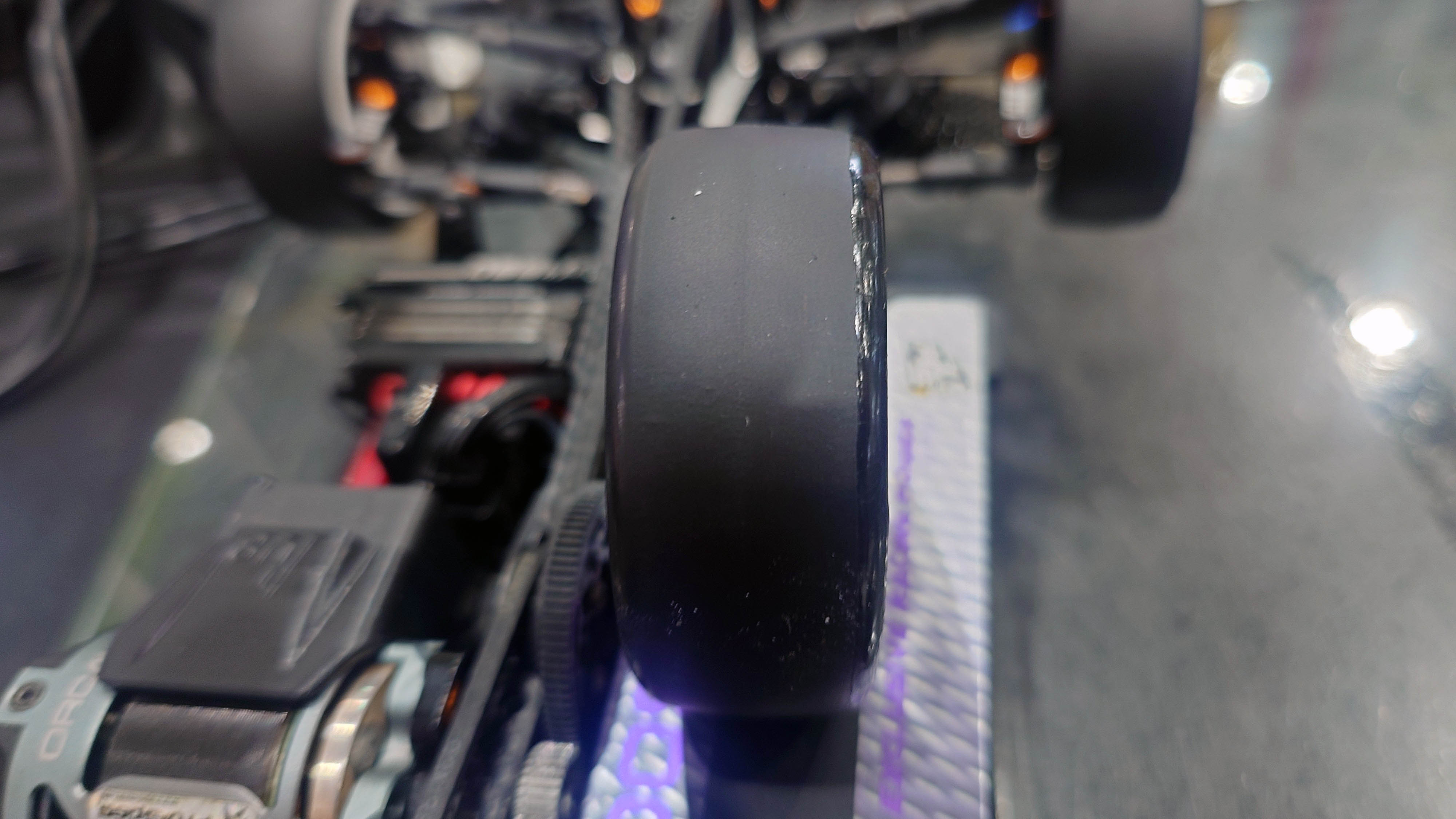
You can prevent the front tires from catching-which can cause the car to flip violently (like being thrown in judo)-by applying glue to the tire shoulders. However, simply put, applying too much glue inevitably reduces cornering performance, so you need to find the right balance based on your car and your driving style.
Regarding the diameter of the glued area, it's best to experiment within the 60–62mm range for the front tires. For reference, the glue on the tires in the photo covers a diameter of about 62.5mm. If you're in a bind, applying this much glue allows the car to turn, but personally, I consider this the upper limit.
By the way, there is another type of movement where the car doesn't catch but instead lifts its inner wheels softly during cornering-sometimes leading to the car flying off the track or flipping over entirely. This is known as "traction roll," and shoulder gluing won't solve the root cause.
While gluing might offer some slight improvement, adjusting the geometry and suspension is crucial in this scenario, so try not to fall into the trap of thinking glue is the cure-all for everything.
Battery Selection
The bare minimum requirement is having enough power to last a full five-minute race, but honestly, modern batteries are all excellent, so you don't need to agonize over the choice.
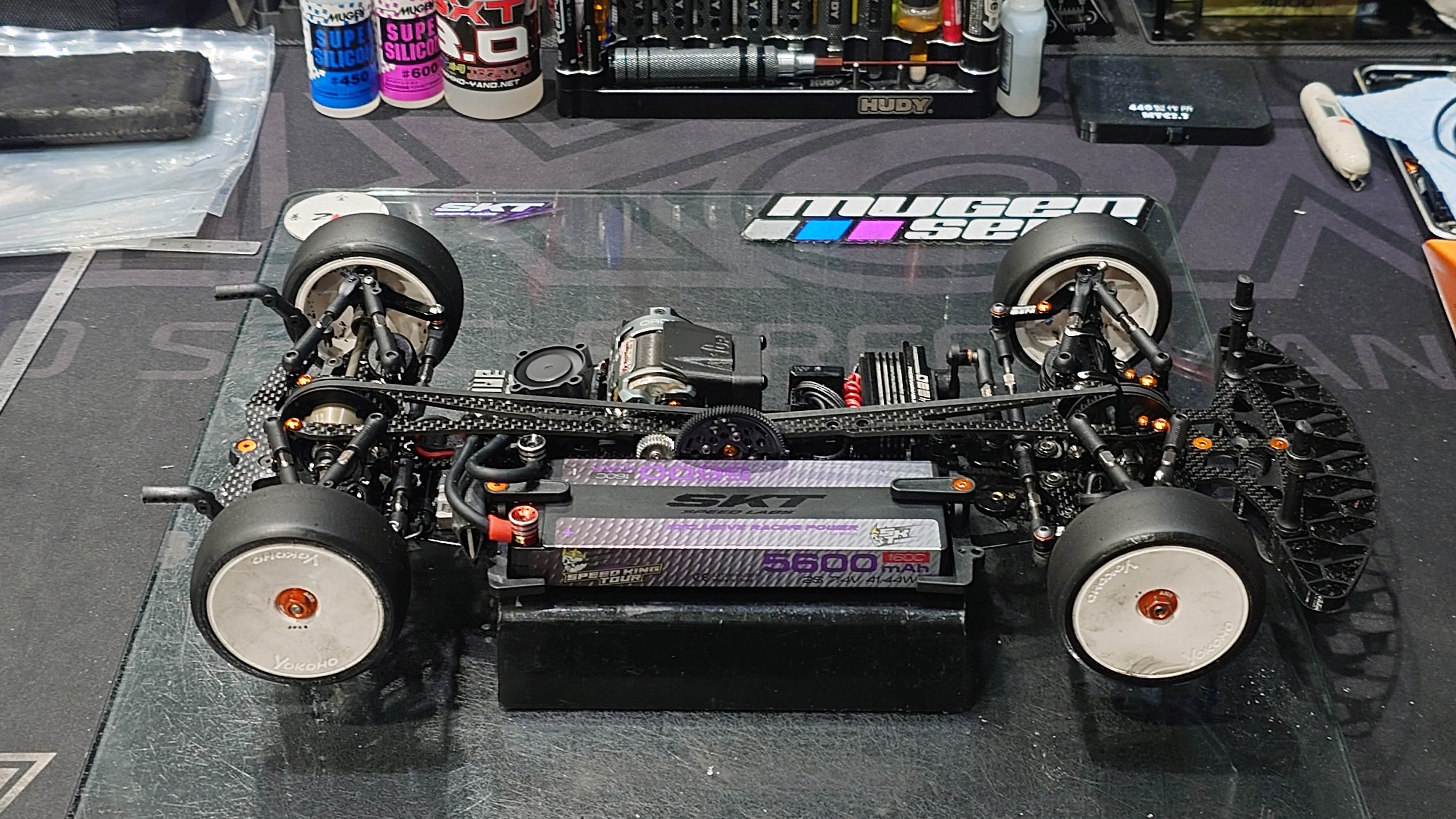
Since I'm racing on high-grip carpet, I prioritize handling performance over raw power. To be fair, the lap times don't change drastically, but I've definitely noticed that a lower center of gravity makes the car's handling more stable. That's why I'm primarily using the SKT5600, which is the lightest option available.
The SKT5600 is ultra-light at around 205g, so by adding weights like brass plates to meet the minimum weight requirement, you can effectively lower the car's center of gravity. My setup involves a 30g brass weight and an additional 10g weight placed behind the battery. Lately, my standard approach is to balance the chassis with a total of 250g of weight on the right side.
Setup Philosophy
While not a hard-and-fast rule, a good guiding principle for your setup is to avoid putting too much load on the tires. After all, the "traction rollover" mentioned earlier is caused by excessive load on the tires.
Since setup sensitivity varies depending on the chassis, I can't give a definitive "do this to get that result" answer, but I hope this line of thinking serves as a useful reference.
|